Slender False-Foxglove
By Lise Fracalossi
Agalinis tenuifolia
Native to: All of New England
Life cycle: Annual
Light: Full/Partial Sun
Soil Moisture: Medium to Dry
Height: 2’
Spacing: 1-2’
Blooms: Aug-Oct
Bloom Color: Pink/Purple
Natural Habitat: Man-made or disturbed habitats, brackish or salt marshes and flats, fresh tidal marshes or flats, meadows and fields, woodlands
Note: Slender false-foxglove is a hemiparasite, meaning that it can photosynthesize, but thrives best if it can also parasitize grasses and related species. We have interplanted them with appropriate host species, but we encourage you to site them where they will have access to other options!
“In late summer, the plant sets out white buds which look like floating pearls. These open to reveal an interesting, magenta flower that stands out from other False Foxgloves: 2 petals curl over each other, forming a hood while the 3 lower petals flare out and curve away from the central tunnel. The bright pink color fades to fuchsia speckles and cream further down the floral trumpet.”
–Prairie Moon Nursery
“Slender-leaved agalinis is an example of a partial plant parasite. It establishes a connection between its roots and those of a host plant using specialized roots called haustoria. These transfer sugars and proteins from the host plant to the parasite. Slender-leaved agalinis is only partially parasitic because it has green tissues and performs photosynthesis.”
–GoBotany
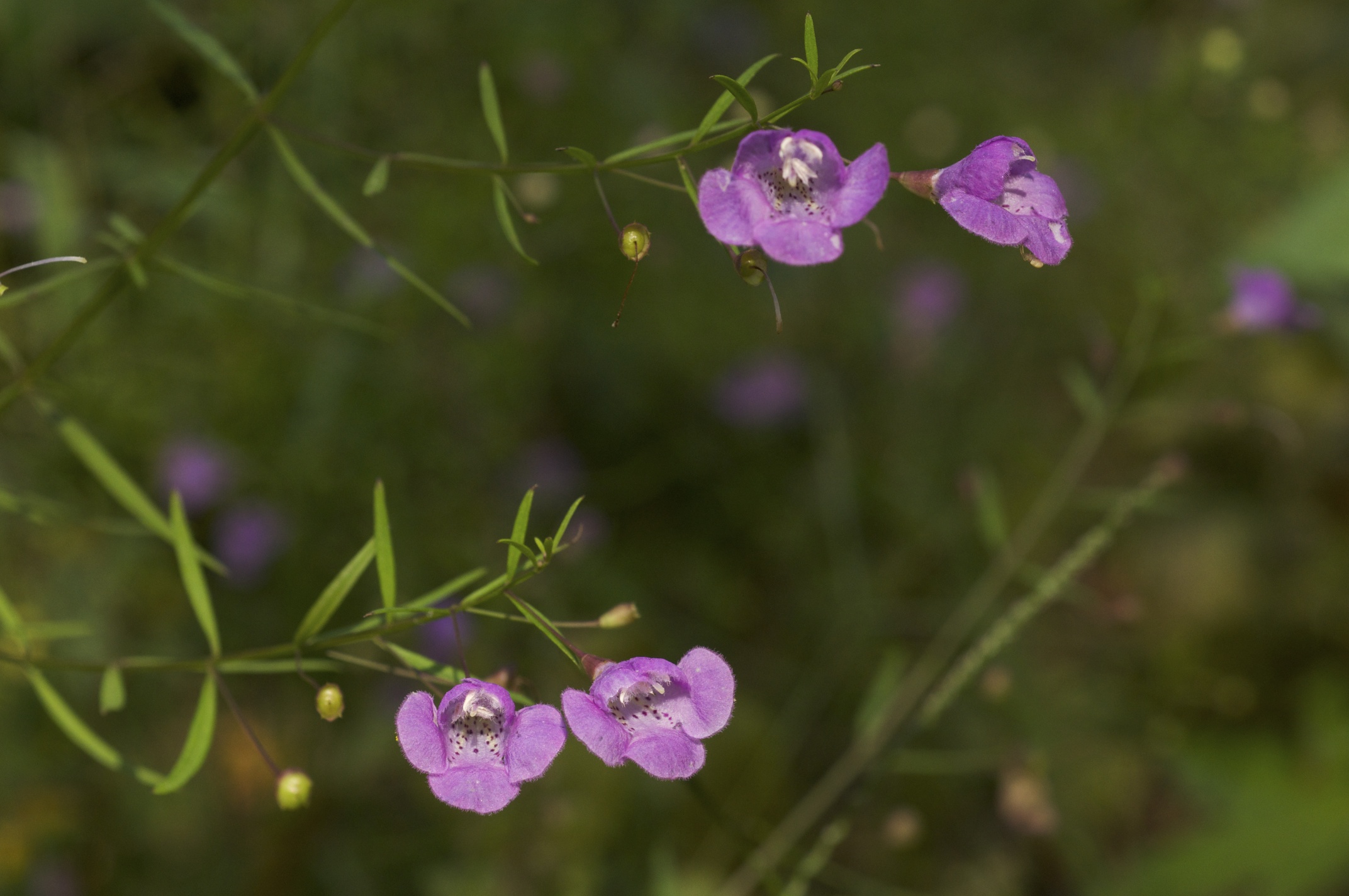
Slender false-foxglove (Agalinis tenuifolia)
Photo (and banner image) by Eric Hunt - Own work, CC BY-SA 3.0