Hemp Dogbane
By Lise Fracalossi
Apocynum cannabinum
Native to: All of New England
Life cycle: Perennial
Light: Full/Partial Sun
Soil Moisture: Medium-Wet to Medium-Dry
Height: 2’
Spacing: 2-3"
Blooms: May-July
Bloom Color: White
Natural Habitat: Man-made or disturbed habitats, forest edges, meadows and fields, shores of rivers or lakes, woodlands
Benefits: Deer/Rabbit Resistant, Host Plant (eg. Snowberry Clearwing, Hummingbird Clearwing)
Note: Despite the common name, hemp dogbane is unrelated to hemp or cannabis.
“Dogbane is also called Indianhemp. The plant has opposing leaves and dense heads of small greenish-white flowers, which are popular with small insect pollinators; mostly bees and moths. The USDA-NRCA lists Dogbane as ‘very high’ in its importance to pollinators. The species may spread in colonies as horizontal roots form from an initial taproot and can be considered aggressive. Flowers are followed by long (4”) narrow pods that contain many silk-tufted seeds. Dogbane’s botanical name refers to its believed toxicity to dogs and its similarity to hemp. The plant’s strong fibers have made it prized for cordage and threads for centuries. Visually, younger plants are often mistaken for Milkweeds, but as the plant matures and flowers, there are many noticeable differences."
–Prairie Moon Nursery
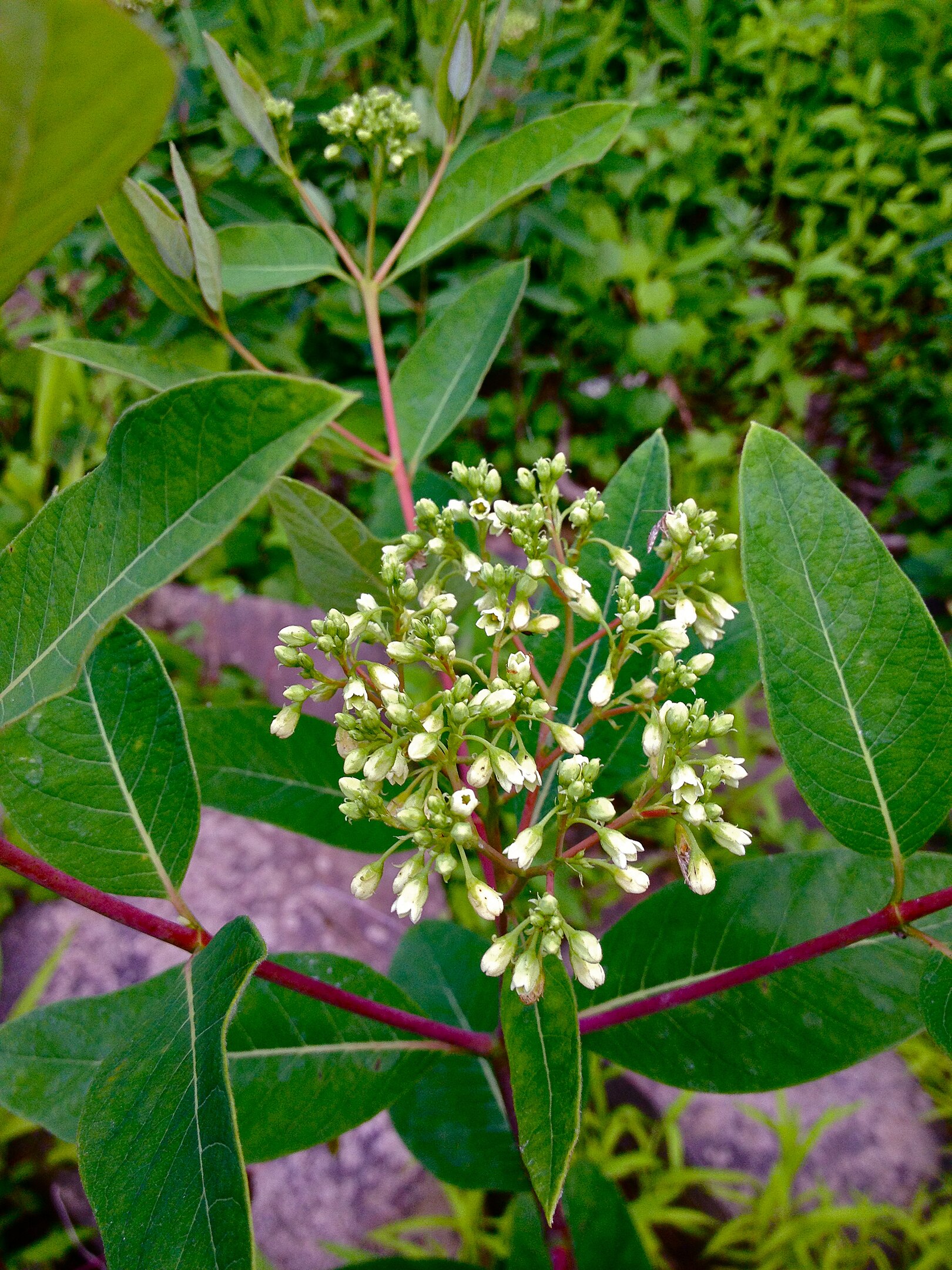
Hemp dogbane (Apocynum cannabinum)
Photo (and featured image) by Fritzflohrreynolds - Own work, CC BY-SA 3.0