Black Chokeberry
By Lise Fracalossi
Aronia melanocarpa
Native to: All New England
Life cycle: Perennial Shrub
Light: Full/Partial Sun
Soil Moisture: Medium-Wet to Medium-Dry
Height: 3-10’
Spacing: 3-6’
Blooms: Spring
Bloom Color: White
Fruits: Summer
Fruit Color: Black
Natural Habitat: Bogs, wet thickets, margins of ponds and lakes, beaver ponds, woods, moist high-elevation forests, and rocky outcrops.
Benefits: Fall Foliage, Host Plant (eg. Coral Hairstreak), Attracts Bees, Attracts Songbirds, Benefits Other Pollinators/Wildlife, Drought Tolerant, Compaction Tolerant, Salt Tolerant, Urban Environment, Low Maintenance, Edible, Erosion Control/Soil Stabilization
“Aronia blends nicely into the landscape when not in flower or fruit. It is a multi-stemmed shrub with small white flowers and deep red anthers. The flowers are followed by black fruits in fall and deep red foliage. A great plant for moist to average garden soils in full or partial sun.”
–Native Plant Trust
“Black chokeberry gets its specific epithet (Melanocarpa), which means black fruit, from the black berries it produces. The common name chokeberry may come from the fact that its fruits are very bitter when eaten right off the tree. This leggy shrub can spread on suckers to grow into an attractive border thicket, which produces showy white flowers in spring and berries that attract birds in the fall.”
–Go Botany
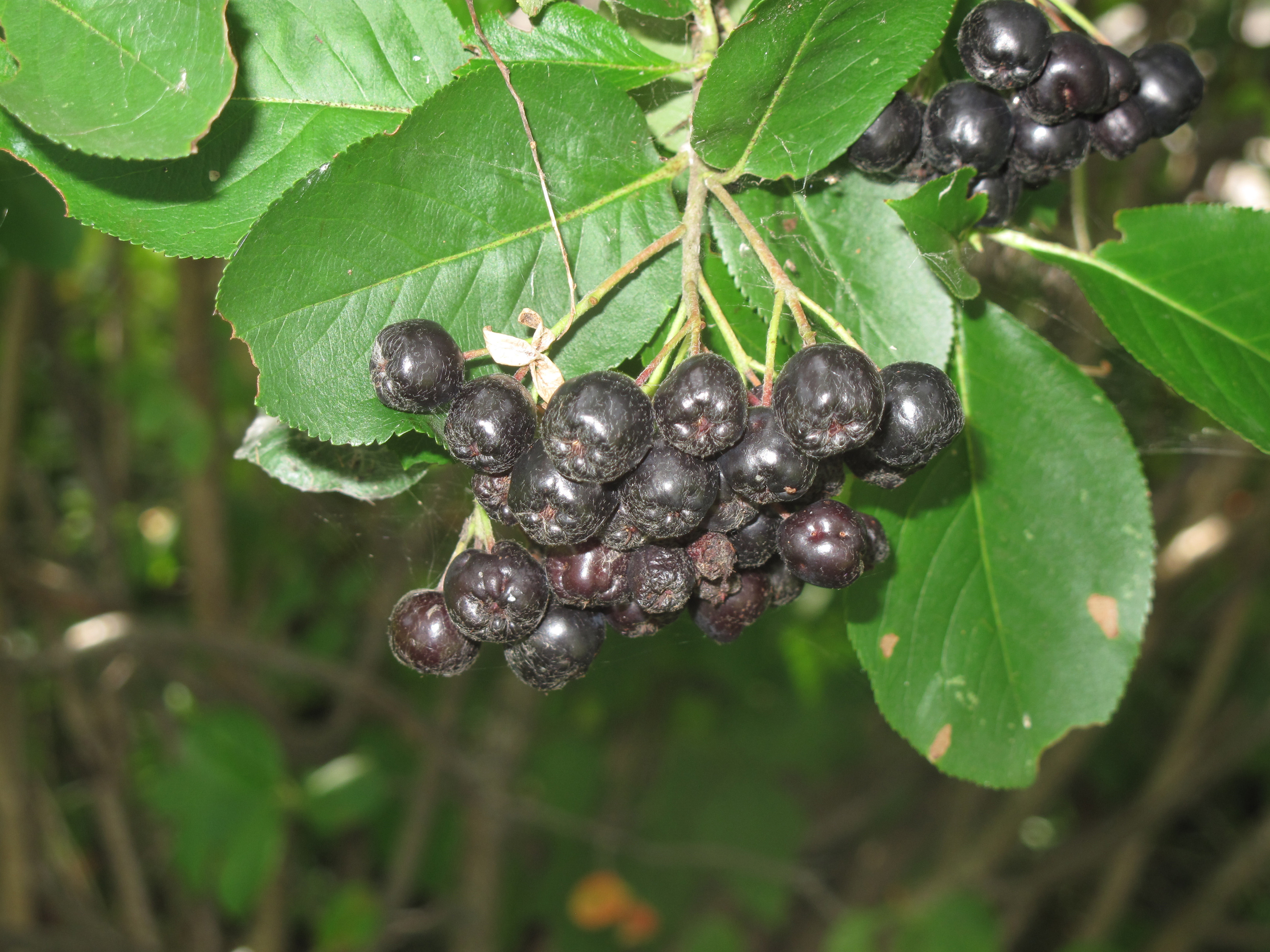
Black chokeberry (Aronia melanocarpa) fruit
Photo by Ayotte, Gilles, 1948 - Bibliothèque de l’Université Laval, CC BY-SA 4.0
Featured image by Krzysztof Ziarnek, Kenraiz - Own work, CC BY-SA 4.0, https://commons.wikimedia.org/w/index.php?curid=114510014