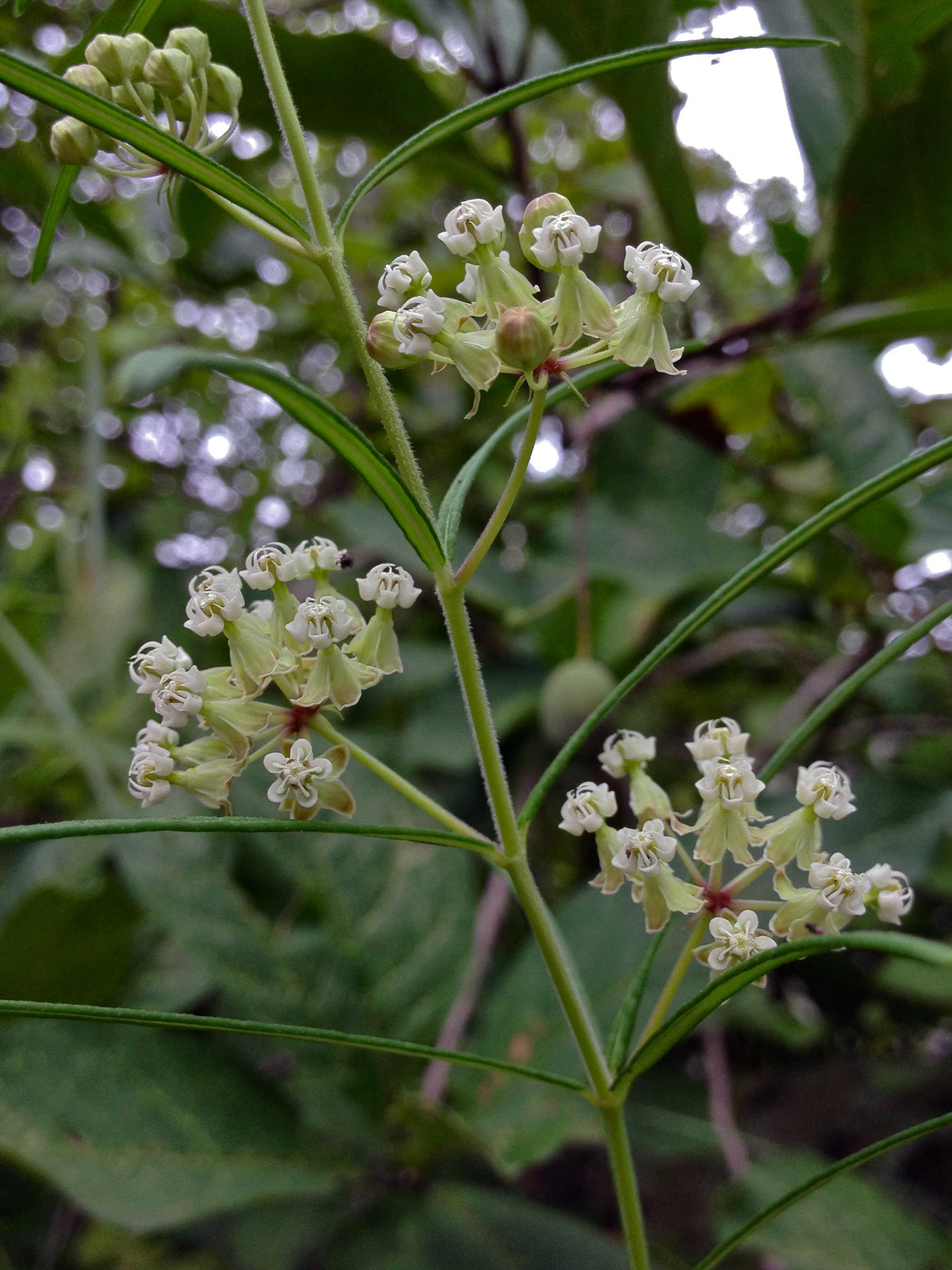
Whorled Milkweed
By Lise Fracalossi
Asclepias verticillata
Native to: VT, MA, CT and RI
Life cycle: Perennial
Light: Full/Partial Sun
Soil Moisture: Medium to Dry
Height: 2’
Spacing: 1-2’
Blooms: Jul-Sep
Bloom Color: White/Green
Natural Habitat: Cliffs, balds, ridges, or ledges; woodlands
Benefits: Pollinator Favorite, Bird Favorite, Deer/Rabbit Resistant, Host Plant (eg. Monarch)
“Whorled Milkweed can bloom anytime between July and September, which is later in the year than many other Milkweeds. There are clusters of approximately 20 flowers near the top of each plant. The white flowers can be a greenish-white on some plants. The nectar of the flowers attracts many kinds of insects, including long-tongued bees, short-tongued bees, wasps, flies, butterflies, skippers and beetles. Like all members of the Asclepias genus, Asclepias verticillata is a larval host plant for monarch butterflies.”
–Prairie Moon Nursery
“Whorled milkweed is distinguished by its whorls of very narrow leaves. New England is at the northeastern limit of its range, and the species is quite rare in some states.”
–GoBotany