Harebell
By Lise Fracalossi
aka Intermediate Bellflower
Campanula rotundifolia (C. intercedens)
Native to: All of New England
Life cycle: Perennial
Light: Full/Partial Sun
Soil Moisture: Medium-Dry to Dry
Height: 4-18”
Spread: 6-8”
Spacing: 6-8”
Blooms: Jun-Sep
Bloom Color: Purple
Natural Habitat: Rocky coastlines, cliffs, shores, and dry meadows
Benefits: Pollinator Favorite, Bird Favorite, Deer/Rabbit Resistant, Host Plant, Drought Tolerant, Salt Tolerant
Pairs Well With: Butterfly milkweed and sundial lupine
Note: This species was recently reclassified as Campanula intercedens (intermediate bellflower) due to new genetic evidence distinguishing it from its European cousin. We use Campanula rotundifolia for consistency in our own record keeping, and with most extant sources of care information.
“Small blue, nodding bell-shaped flowers on wispy stems bloom in early to mid-summer, sometimes with repeated blooms. Attractive low clump of round basal leaves. Deer-resistant foliage.”
–Wild Seed Project
“Rosettes of rounded basal leaves wither early after sending up clusters of wiry stems with long narrow foliage. The slender flowering stems can rise up to 12 inches, often becoming so weak that the entire plant bends over. The bloom time can be very sporadic and prolonged… Campanula rotundifolia does well in rocky soils and crevices, often self-seeding in retaining walls. Some theorize that its common name alludes to an ancient association with witches, suspected of transforming into hares.”
–Prairie Moon Nursery
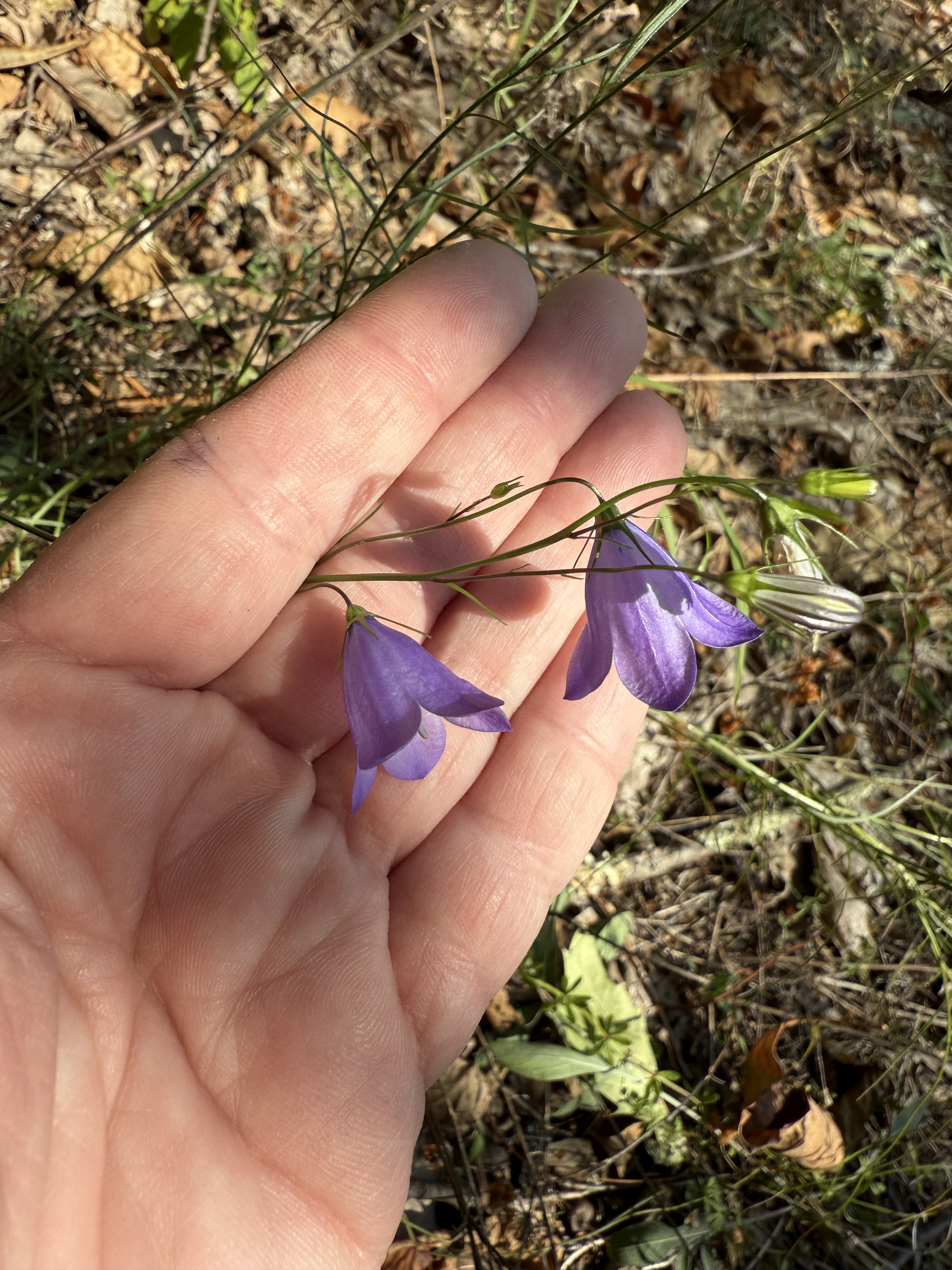
Harebell (Campanula rotundifolia/intercedens)
Photo credit: Lise Fracalossi, CC-0/Public Domain
Featured image credit: Bruce Cook on iNaturalist, CC-0/Public Domain, no rights reserved.