Indian paintbrush
By Lise Fracalossi
aka scarlet painted-cup
Castilleja coccinea
Native to: CT, MA, RI; limited NH, ME (extinct in wild in all but CT)
Life cycle: Annual/Biennial
Light: Full/Partial Sun
Soil Moisture: Medium-Wet to Medium-Dry
Height: 2’
Spacing: 8-12”
Blooms: May-June
Bloom Color: Red
Natural Habitat: Man-made or disturbed habitats, meadows and fields, swamps
Benefits: Bird Favorite, Highly Recommended for Home Landscaping, Host Plant (eg. various Checkerspot)
Note: This plant is a hemiparasite, meaning it derives part of its nourishment from parasitizing a host plant. Its host are usually grasses, sedges, or rushes, especially path rush (Juncus tenuis), blue grama (Bouteloua gracilis), and Pennsylvania sedge (Carex pensylvanica)
“Indian Paintbrush is a sought-after prairie beauty that prefers bright sites with medium-dry to medium-wet soils. An annual or biennial, its vivid scarlet bracts nearly hide small, greenish flowers and appear to have been dipped in paint. May and June are the typical bloom time, but because of its annual or biennial nature, you can see flowers blooming as late as October.”
–Prairie Moon Nursery
“Scarlet painted-cup is an annual herb that is hemiparasitic (meaning it obtains some resources from other plants via underground connections with their roots, as well as using photosynthesis to obtain its own resources). While it grows vigorously only in the presence of a host, it has a fairly wide range of host species. It was formerly found in several New England states, but is now apparently restricted to Connecticut, where only a small handful of populations remain.”
GoBotany by Native Plant Trust
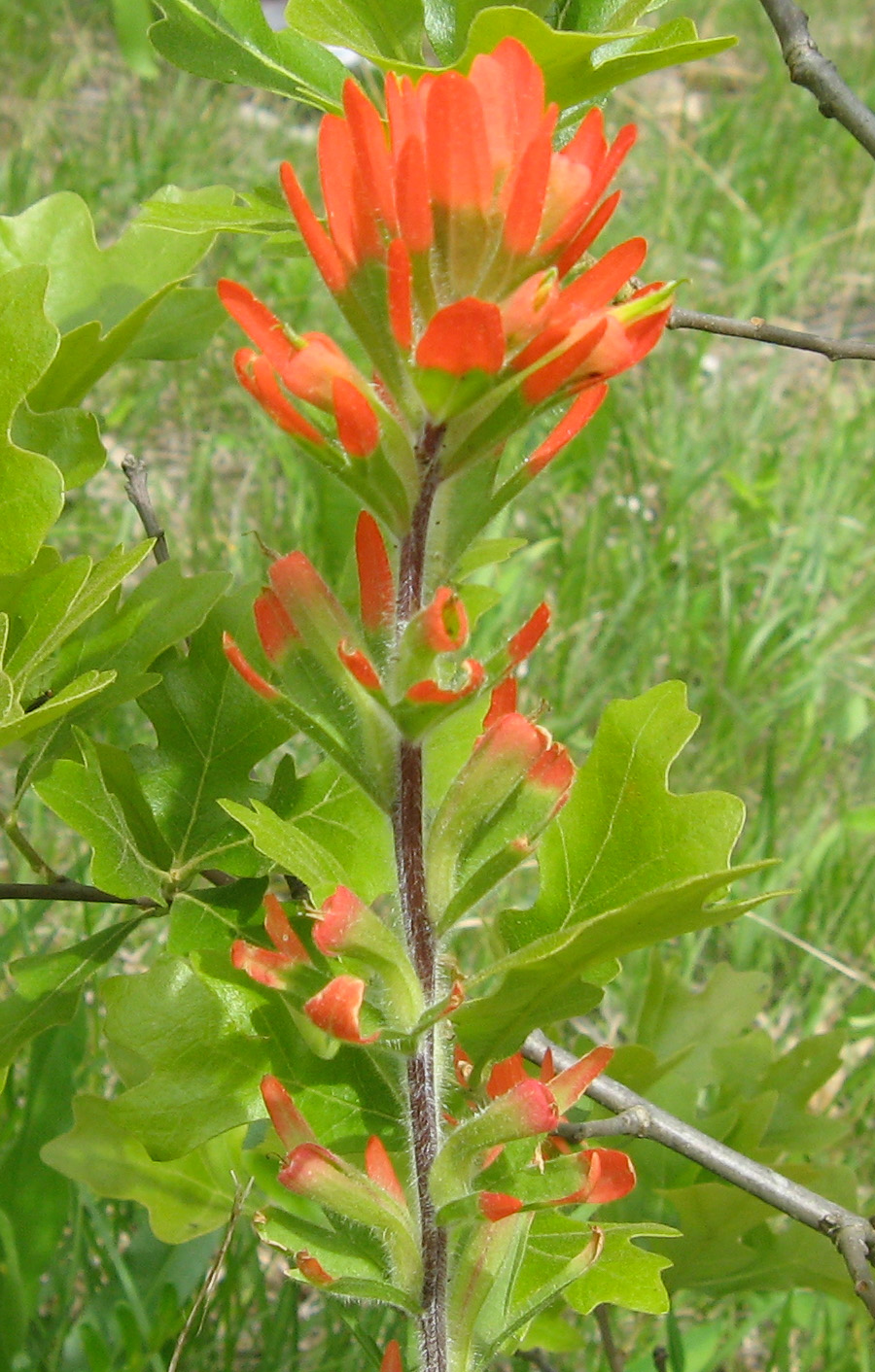
Castilleja coccinea, a limestone prairie in Lewis County, Kentucky.
Featured image: Superior National Forest - Castilleja_coccinea_9-eheep Uploaded by AlbertHerring, CC BY 2.0, https://commons.wikimedia.org/w/index.php?curid=29789660