Buttonbush
By Lise Fracalossi
Cephalanthus occidentalis
Native to: All of New England
Life cycle: Perennial Shrub
Light: Full/Partial Sun
Soil Moisture: Medium to Wet Soil
Height: 3-12’
Spacing: 3-4’
Blooms: June-August
Bloom Color: White
Natural Habitat: Thickets, low woods, swamps, and stream margins
Benefits: Pollinator Favorite, Bird Favorite, Deer/Rabbit Resistant, Host Plant, Salt Tolerant, Fragrant, Low Maintenance
Pairs Well With: American hazelnut, American spikenard and Shrubby St. John’s wort
“Often found in thickets, low woods, swamps, and stream margins, where older shrubs will have many branches and twisted trunks. Can tolerate flood conditions and shallow standing water for short periods of time. It does not do well in dry soils.”
–Wild Seed Project
“A common sight in New England wetlands, buttonbush produces fragrant, perfectly spherical flower clusters attractive to a vast range of bees and butterflies. This broad, striking plant can grow anywhere from moist soil to standing water.”
–Native Plant Trust
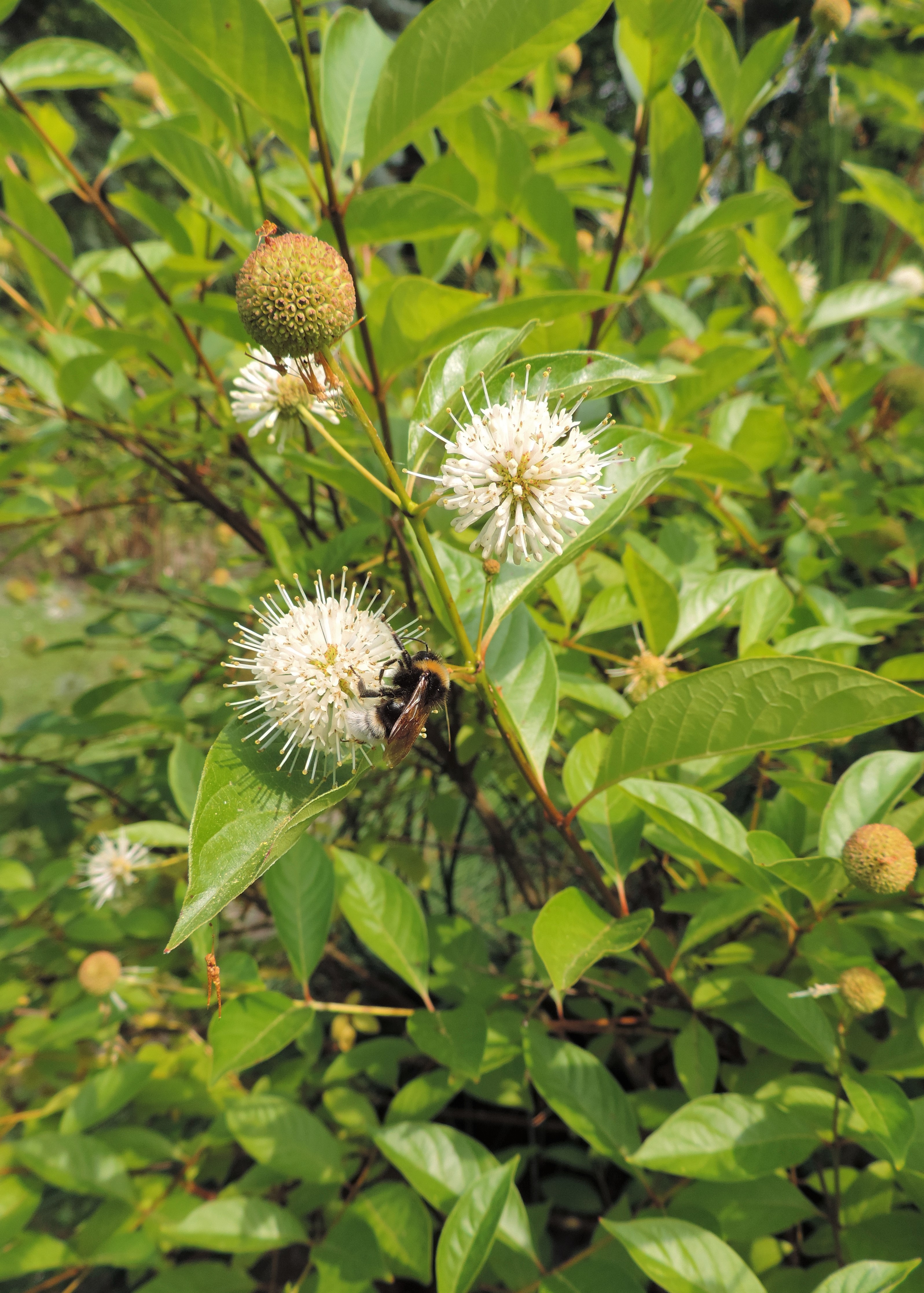
Buttonbush (Cephalanthus occidentalis)
Photo (and banner image) by Krzysztof Ziarnek, Kenraiz - Own work, CC BY-SA 4.0