Wild Cucumber
By Lise Fracalossi
Echinocystis lobata
Native to: All New England
Life cycle: Annual
Light: Full/Partial Sun
Soil Moisture: Wet to Medium
Height: 15-20’
Spacing: 3-10’
Blooms: July-September
Bloom Color: white
Natural Habitat: Woodland edges, thickets, and roadsides
Benefits: Deer/Rabbit Resistant, Pollinator Favorite, Decorative Uses (eg. dried arrangements)
Notes: Despite its name, the wild cucumber is NOT edible. Does best when it can climb on nearby fences or trellises.
“A fast-growing and dramatic annual vine. Large star-shaped bright green leaves with numerous clusters of creamy white flowers on long-climbing stems. Ideal for fences, trellises, or roaming over large, open shrubs. Attracts many pollinating insects from mid-summer until fall.”
– Wild Seed Project
“The smooth, branching vines reach lengths of 15-20 feet and can be aggressive. Wild Cucumber is identified by its alternately placed star-shaped leaves, which resemble maple-like leaves, each with 5 to 7 pointed lobes. Its flowers are pale yellowish-white and are very fragrant. Wild cucumber’s pulpy green, oval seed pods grow up to two inches long and are covered with sharp spines so beware. It likes sun and moist soil but will grow well in quite a bit of shade. When ripe, the pod bursts open and large brown or black seeds are found.”
– Prairie Moon Nursery
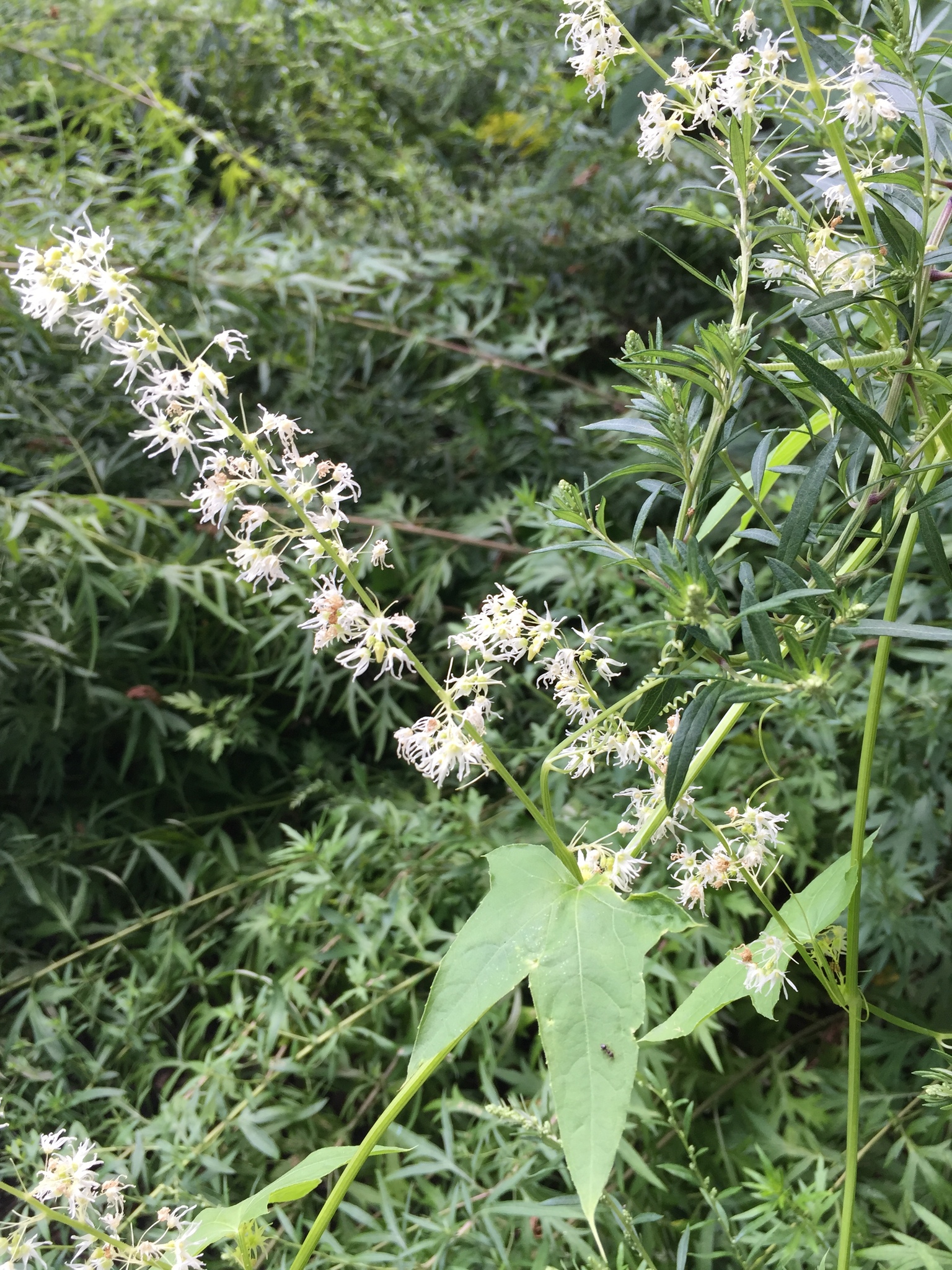
Echinocystis lobata (wild cucumber). Photo taken August 2019 in Framingham, MA by Lise Fracalossi
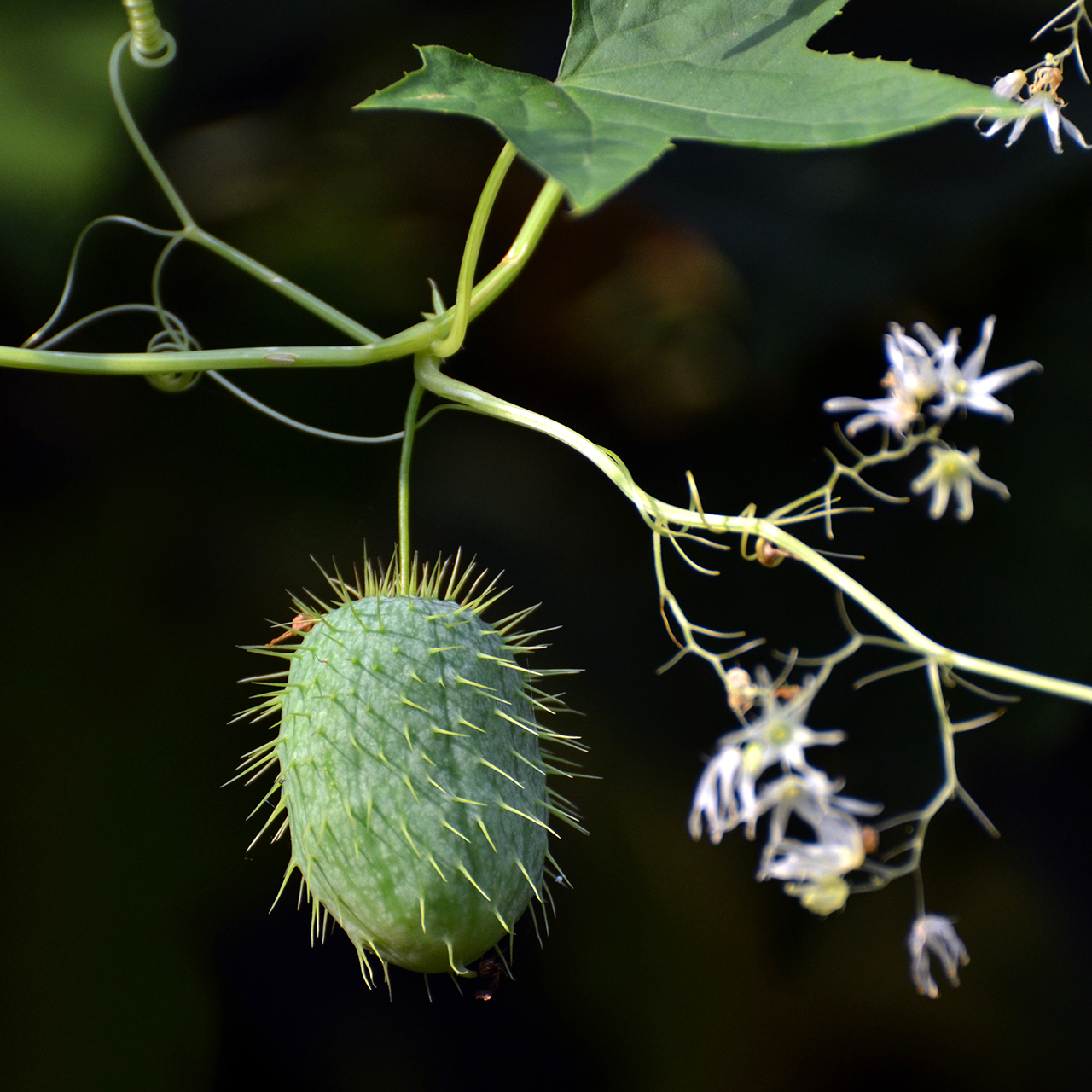
Echinocystis lobata; unripe fruit (August); Slovakia
Featured image: leaf and bud of Echinocystis lobata. Photo by Lise Fracalossi in August 2020 in Plattsburgh, NY.