White Wood Aster
By Lise Fracalossi
Eurybia divaricata
Native to: All of New England
Life cycle: Perennial
Light: Partial Sun
Soil Moisture: Medium to Dry
Height: 1-2’
Spacing: 2-3’
Blooms: Aug-Sep
Bloom Color: White
Natural Habitat: Woodland edges and in the understory of deciduous forests with moist to dry soils
Benefits: Pollinator Favorite, Attracts Birds, Drought Tolerant, Urban Environment, Host Plant
“This late summer to early fall-blooming woodland aster makes a handsome landscape plant. Dark green, heart-shaped leaves with deeply-toothed edges make a low, tidy clump from spring to mid-summer. In August, dark flowering stems emerge and open to clusters of small white flowers with yellow centers. Attracting butterflies and bees, the yellow centers turn red as the flowers are pollinated. This aster is a charming, low maintenance landscape plant for shady gardens. Tolerates dry soils.”
–Wild Seed Project
“Having Asters in your own landscape benefits nectar-collecting pollinators late in the season when most other flowers are done blooming. Asters also benefit birds; seeds are eaten by song birds during the winter and the seed fluff gives them soft nesting materials. ”
–Prairie Moon Nursery
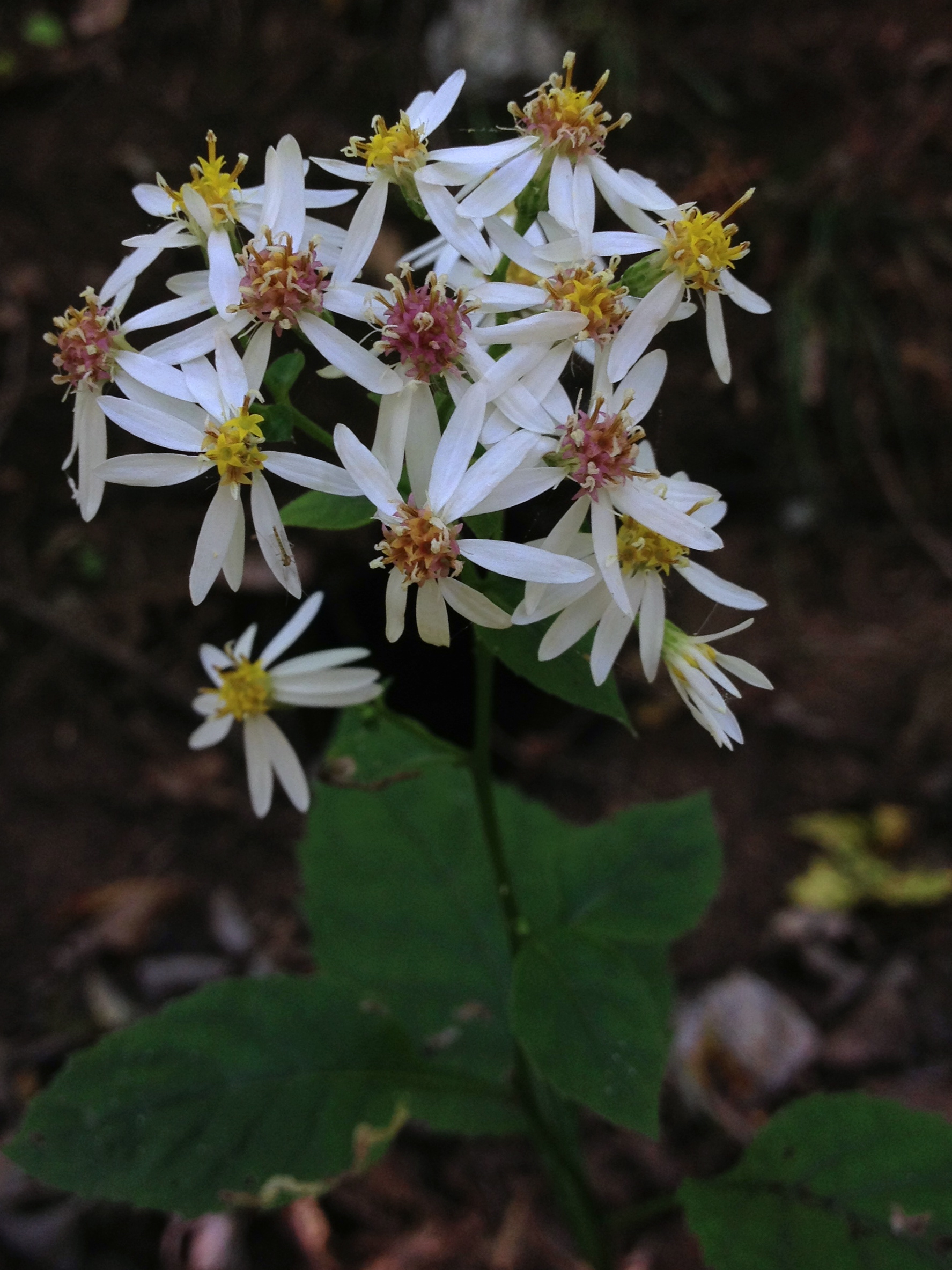
White wood aster (Eurybia divaricata)
Photo (and featured image) by Fritzflohrreynolds - Own work, CC BY-SA 3.0