Grass-leaved Goldenrod
By Lise Fracalossi
Euthamia graminifolia
Native to: All New England
Life cycle: Perennial
Light: Full/Partial Sun
Soil Moisture: Wet to Medium-Dry
Height: 3-4’
Spread: 2-6’
Spacing: 2-4’
Blooms: Jul-Sep
Bloom Color: Yellow
Natural Habitat: Man-made or disturbed habitats, meadows and fields, shores of rivers/lakes, wetland margins
Benefits: Pollinator Favorite, Deer/Rabbit Resistant, Host Plant, Drought Tolerant, Low Maintenance, Erosion Control
“Flat-topped or grass-leaved goldenrod is a striking yet common species throughout the US and Canada; this rhizomatous, colony-forming wildflower will grow in dry to moist soil so long as it gets enough light. If it does, expect an aggressive, bushy, abundantly blooming colony ideal for naturalizing and for erosion control over wide areas. ”
–Native Plant Trust
“The smaller flowers of this plant attract many insects like butterflies, moths, long tongued bees, short tongued bees, beetles, etc; Chauliognathus pennsylvanicus (Goldenrod Soldier Beetle) and Epicauta pensylvanica (Black Blister Beetle) are the most attracted to this plants flowers! Swamp Sparrows and Eastern Goldfinches have been known to feed on the seeds of this plant as well.”
–Prairie Moon Nursery
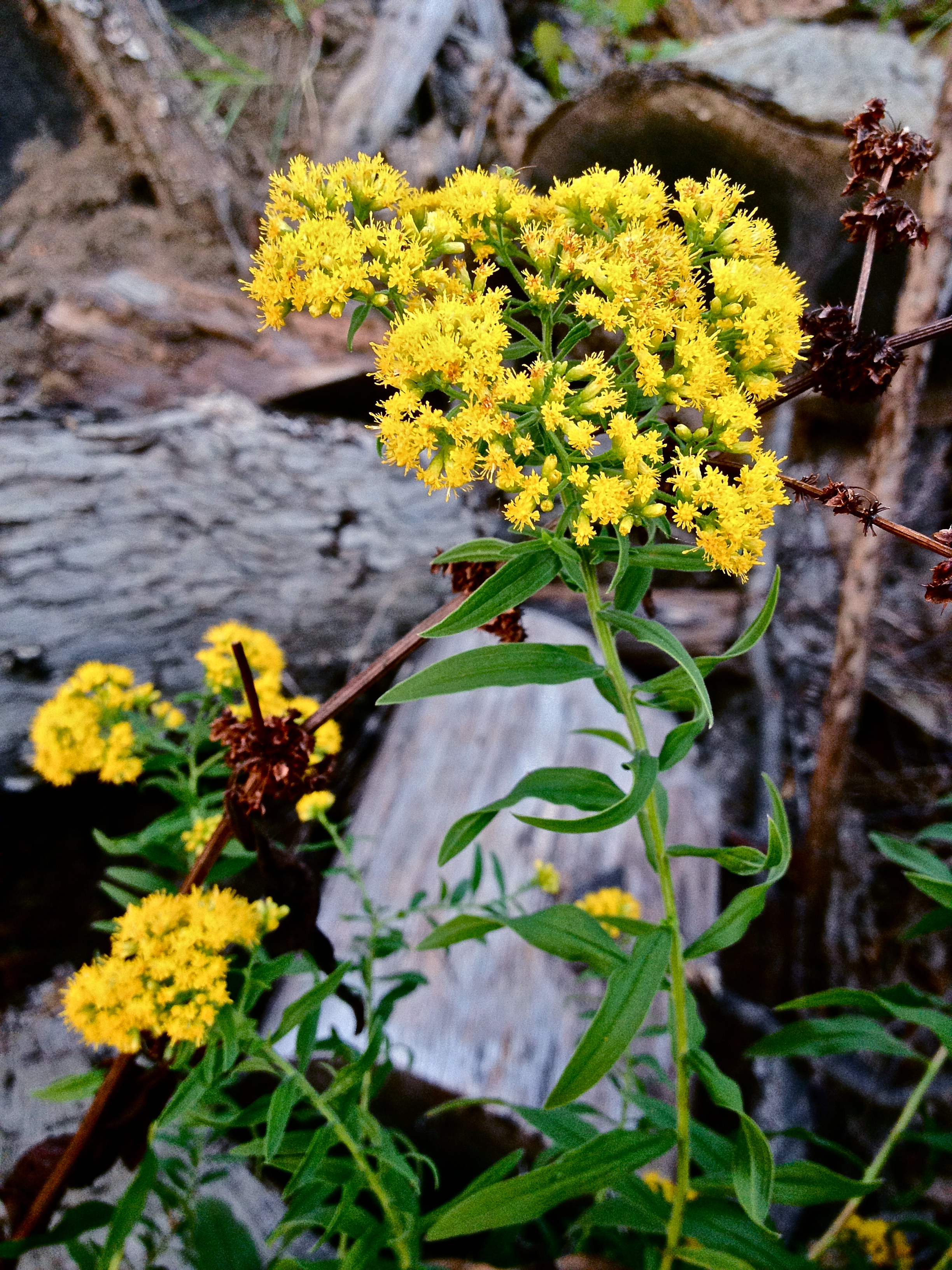
Grass-leaved goldenrod (Euthamia graminifolia)
Photo (and featured image) by Fritzflohrreynolds - Own work, CC BY-SA 3.0