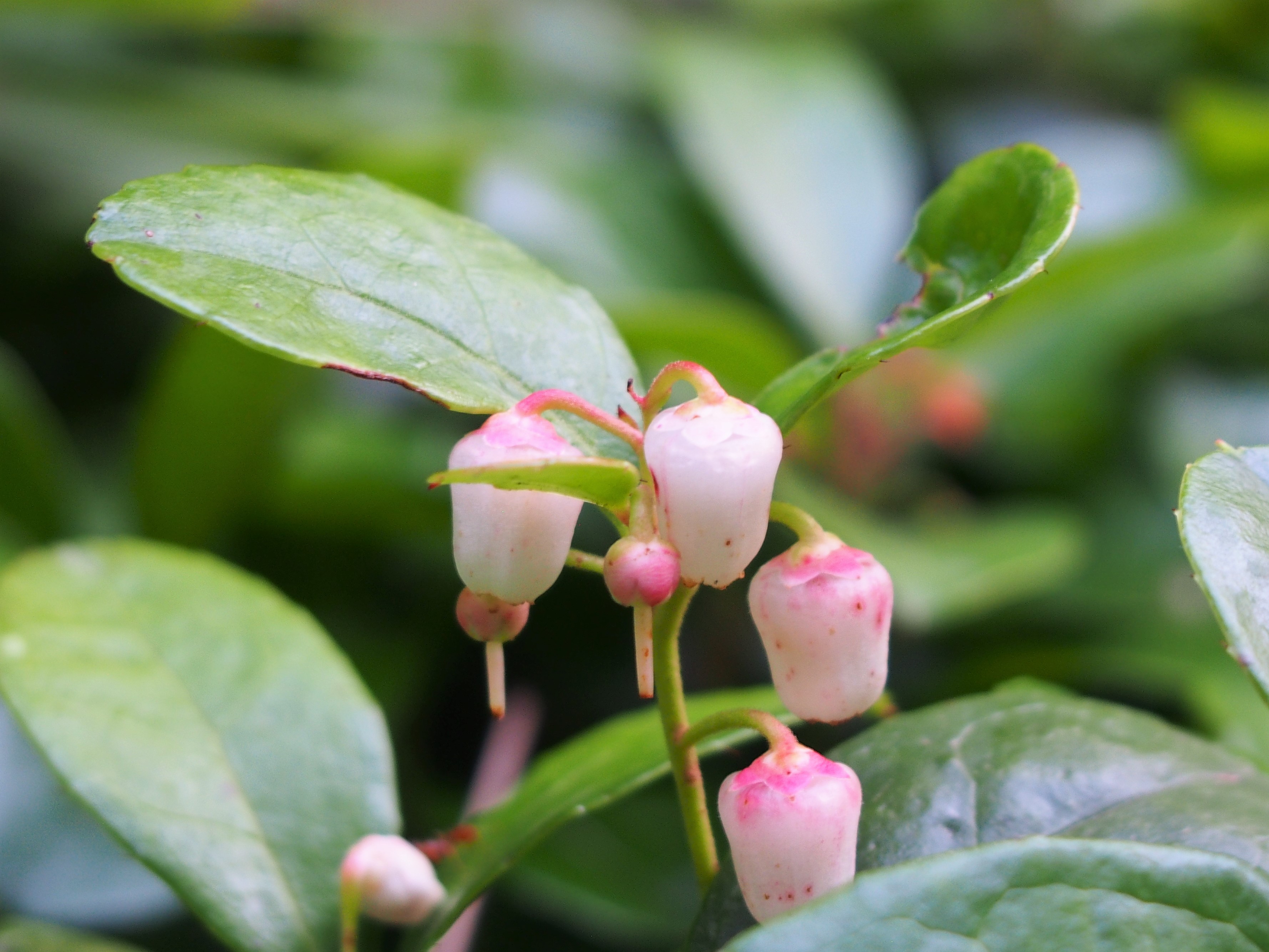
Wintergreen
By Lise Fracalossi
aka teaberry, checkerberry, eastern spicy-wintergreen
Gaultheria procumbens
Native to: All of New England
Life cycle: Perennial
Light: Partial/Full Shade
Soil Moisture: Medium to Dry
Height: 1-6"
Spacing: 6-12"
Blooms: Summer
Bloom Color: White
Fruits: Fall/Winter
Fruit Color: Red
Natural Habitat: New England’s pine and hardwood forest’s understories
Benefits: Fall Foliage, Winter Interest, Attracts Bees, Benefits Other Pollinators/Wildlife, Deer/Rabbit Resistant, Drought Tolerant, Fragrant, Edible, Low Maintenance
Pairs Well With: Blueberry (Vaccinium spp.), mountain laurel (Kalmia latifolia), Partridgeberry (Mitchella repens), Pennsylvania sedge (Carex pensylvanica)
Note: Teaberry is sensitive to the dissolved minerals in tap water. As much as feasible it should be watered with rainwater or distilled water. Like most native plants, once it is established in the landscape it should not need much or any watering, however.
“Wintergreen’s evergreen leaves are the original source of wintergreen flavoring and make for a great trail-side snack. In the wild, these plants tend to form trailing, sporadic patches in shady woodlands. Give them a bit more sun and they can fill out nicely.”
– Native Plant Trust
You can taste the classic wintergreen flavor in the red berries of eastern spicy-wintergreen, commonly found in the understory of acid forests throughout New England. Wintergreen was used as a cold remedy and analgesic among the Algonquin, Cherokee, Chippewa, and Iroquois, and for other medicinal uses or simply as a tasty tea by many tribes.
– Go Botany
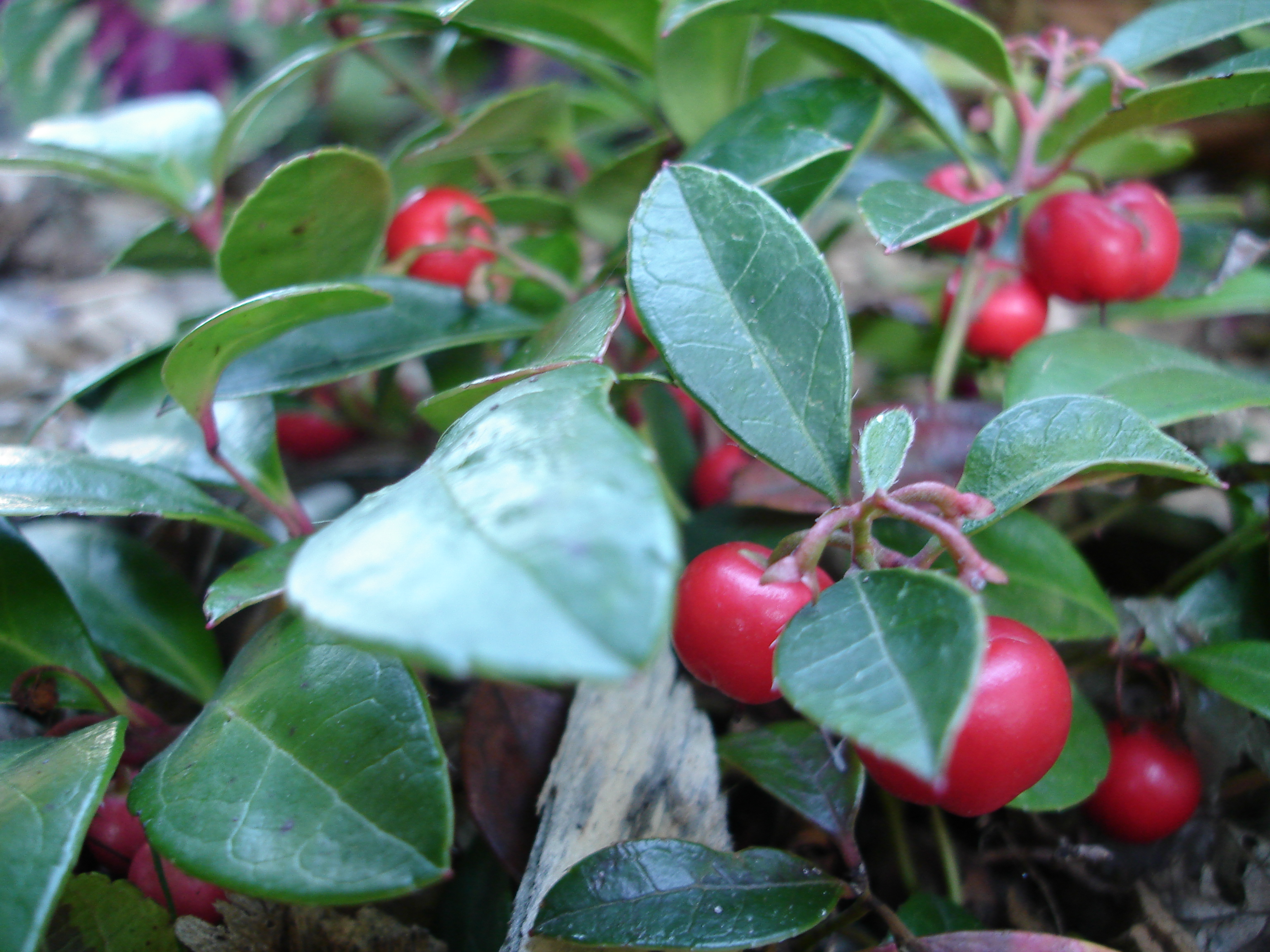
The red berries and dark green foliage of wintergreen or teaberry (Gaultheria procumbens)