Path Rush
By Lise Fracalossi
Juncus tenuis
Native to: All of New England
Life cycle: Perennial
Light: Full/Partial Sun
Soil Moisture: Medium-Wet to Dry
Height: 8-20”
Spacing: 1-2’
Blooms: June-September (non-showy)
Natural Habitat: Human-disturbed or -maintained habitats, meadows and fields, shores of rivers or lakes
Benefits: Bird Favorite, Compaction Tolerant, Urban Environment, Drought Tolerant, Deer/Rabbit Resistant, Erosion Control/Soil Stabilization, Low Maintenance
“Path rush grows wild throughout North America, forming dense, diminutive clumps (compared to other rushes) in full sun to partial shade. It grows well in disturbed areas and moist areas such as wetlands, but can also be found as one of the most widespread meadow rushes. Path rush makes a great walkable groundcover or alternative lawn, with much better wildlife value than typical turf grass.”
–Native Plant Trust
“Path rush is a ubiquitous rush found in a wide variety of open sites and frequently encountered along paths and trails. It was used by the Cherokee to make a wash to strengthen babies and by the Iroquois as an emetic to induce vomiting in athletes.”
–Go Botany
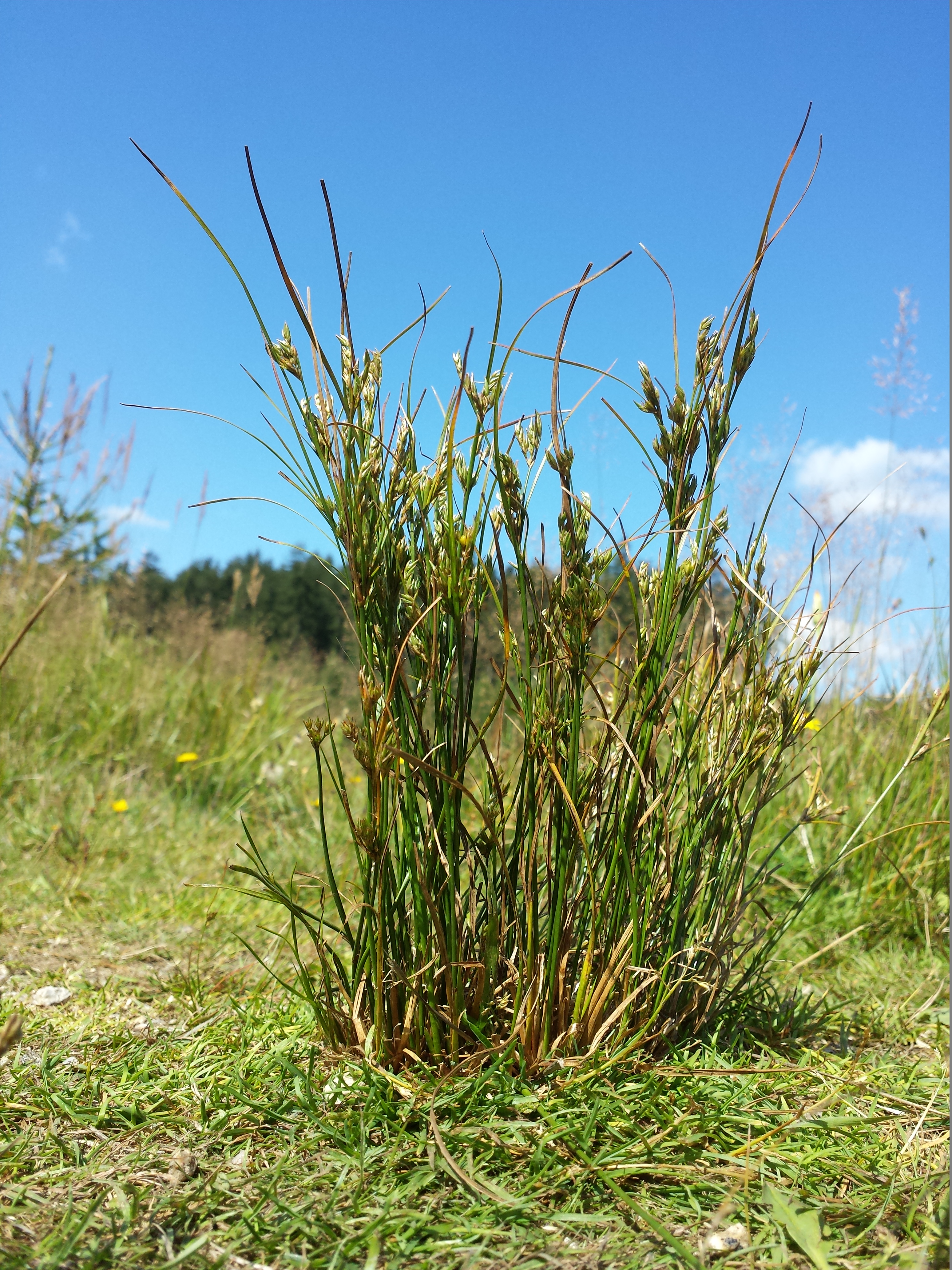
Path rush (Juncus tenuis)
Photo (and banner image) by Stefan.lefnaer - Own work, CC BY-SA 4.0