Spotted Bee-Balm
By Lise Fracalossi
Monarda punctata
Native to: Connecticut, Massachusetts, Vermont
Life cycle: Perennial/self-sowing Biennial
Light: Full/Partial Sun
Soil Moisture: Medium-Dry to Dry
Height: 2-3’
Spread: 12-24"
Spacing: 8-12”
Blooms: July-September
Bloom Color: pink/purple
Natural Habitat: Dry sandy or gravelly soils of beaches, pine barrens, woodland edges, and roadsides.
Benefits: Deer/Rabbit Resistant, Pollinator Favorite, Bird Favorite, Urban Environment, Drought Tolerant, Edible, Low Maintenance, Host Plant (Raspberry pyrausta)
Pairs Well With: Blue-eyed grass, butterfly milkweed, Scotch bellflower, sundial lupine, and New Jersey tea
“Blooming in late summer with pale pink, tiered flower clusters and gray-green foliage. This plant makes a dramatic garden display and attracts an interesting array of pollinating insects. Foliage can be used for tea. A biennial species, but will self-sow if happy in its location. Deer-proof.”
–Wild Seed Project
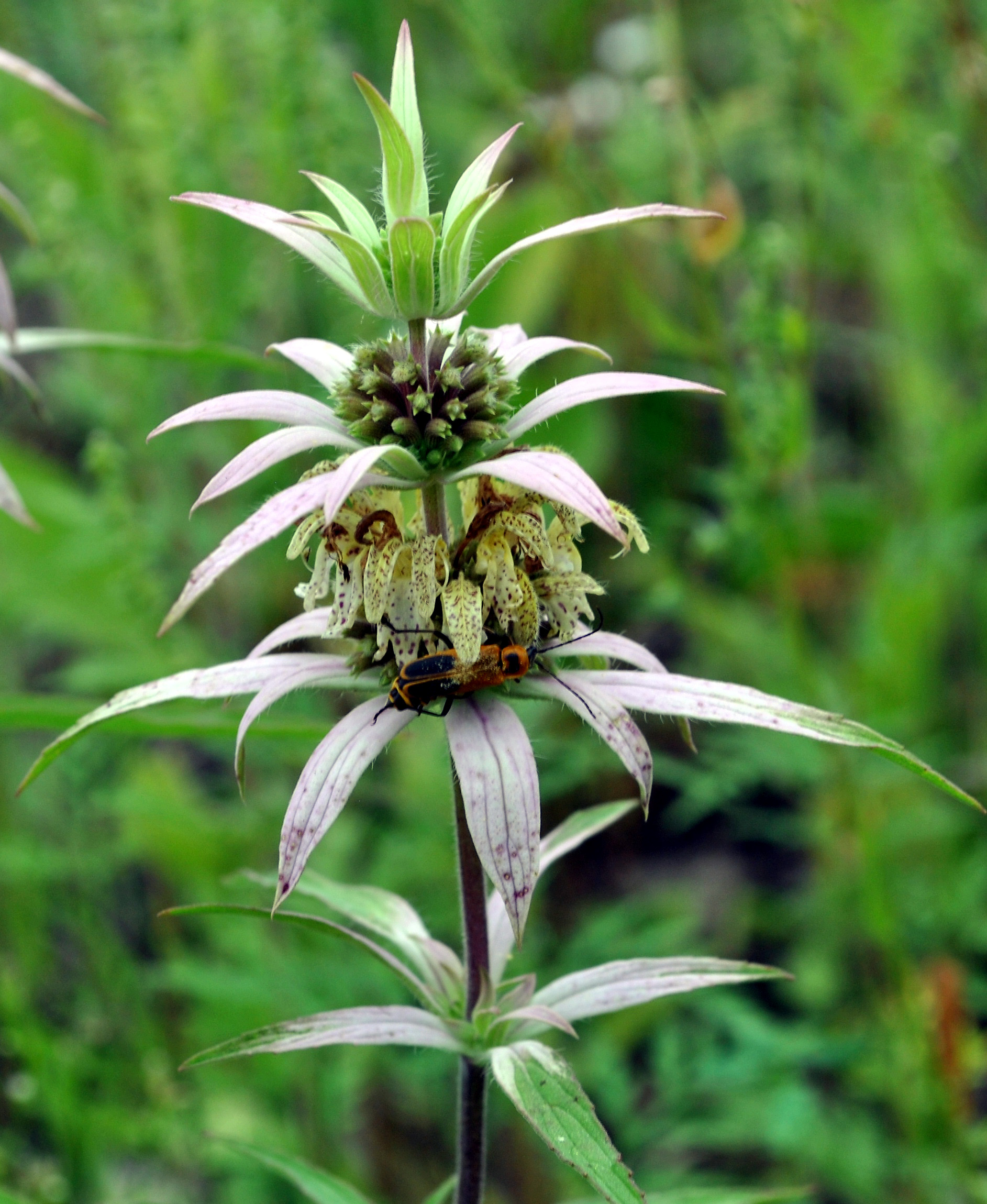
Monarda punctata (spotted bee-balm) in bloom
Photo (and featured image) by Aaron Carlson from Menomonie, WI, USA - Monarda punctata, CC BY-SA 2.0