Eastern Prickly Pear
By Lise Fracalossi
Opuntia humifusa
Native to: MA, CT, RI
Life cycle: Perennial
Light: Full Sun
Soil Moisture: Dry
Height: 4-8”
Spacing: 6-8”
Blooms: June-July
Bloom Color: Yellow
Fruits: Fall/Winter
Fruit Color: Red
Natural Habitat: Coastal beaches, dunes, grassland, meadows and fields, ridges or ledges
Benefits: Host Plant, Attracts Bees, Benefits Other Pollinators/Wildlife, Salt Tolerant, Drought Tolerant, Deer/Rabbit Resistant, Edible*, Low Maintenance
Caution: In addition to spines, Eastern prickly pear is covered in barbed hairs that easily lodge in the skin when touched. These can be uncomfortable and difficult to remove, so we recommend only handling the plant with tongs or tweezers. While pads and fruit are edible with the right preparation, we urge you to do your own edibility research before consuming.
“Eastern prickly pear is a cactus that grows all along the coast of the Eastern US, including up through southern New England. Perfect as a specimen plant in dry, rocky, sunny spots, this cactus manages to survive in winter by decreasing the water content in its leaves, leaving high concentrations of glucose to function as antifreeze.”
–Native Plant Trust
“Eastern prickly-pear is New England’s only native cactus, found in sandy habitats along the Atlantic coast in Connecticut, Massachusetts and Rhode Island. Its North American distribution includes many sandy habitats inland, including sandhill prairie, shortgrass prairie and Texas savanna, among others.”
–Go Botany
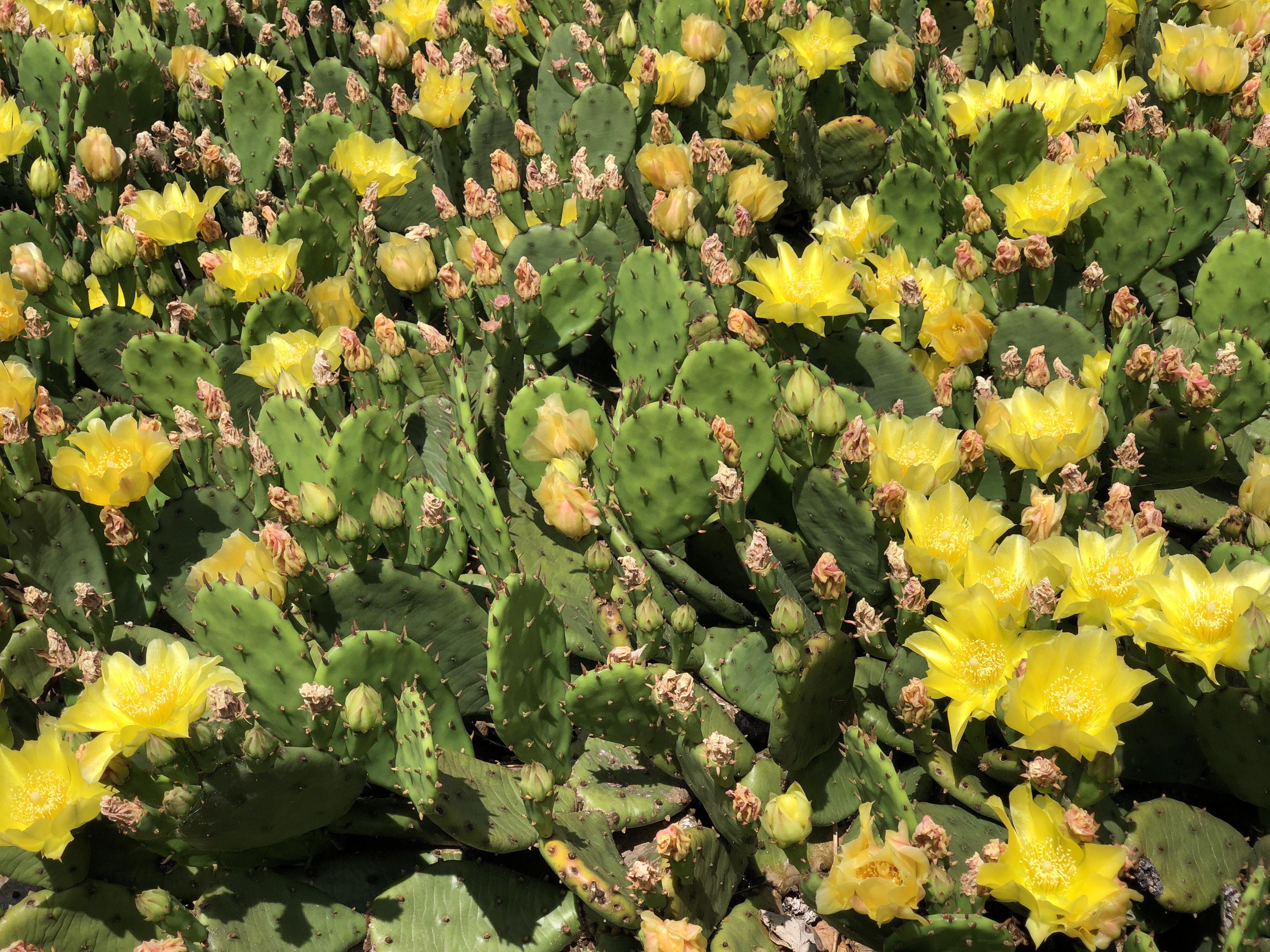
Eastern Prickly Pear (Opuntia humifusa)
Photo (and featured image) by Famartin - Own work, CC BY-SA 4.0