Foxglove Beardtongue
By Lise Fracalossi
Penstemon digitalis
Native to: PA and further south
Life cycle: Perennial
Light: Full/Partial Sun
Soil Moisture: Medium to Medium-Dry
Height: 1-4’
Spread: 14-18”
Spacing: 12-18”
Blooms: June-July
Bloom Color: White
Natural Habitat: Dry to fertile meadows, woodland edges, roadsides, and waste areas.
Benefits: Pollinator Favorite, Deer/Rabbit Resistant, Bird Favorite, Host Plant (eg. Chalcedony Midget moth), Drought Tolerant, Urban Environment, Low Maintenance
Pairs Well With: New England aster, Virginia mountain-mint, wild bee-balm, scotch bellflower, little bluestem, switch panicgrass, and red columbine
Note: The species epithet of foxglove beardtongue, “digitalis”, is a nod to its similarity in appearance to true foxgloves of genus Digitalis. However, foxglove beardtongue is not closely related to true foxgloves, and is in fact a penstemon!
“Penstemon is well known for a tough-as-nails, grow-anywhere attitude. The flowers are sizeable compared to others in the genus, and the floral stems range in color from green to red. Great for native bees, and also a host plant for the Chalcedony Midget moth.”
– Native Plant Trust
“The tubular flowers of this plant attract long-tongued bees, including honeybees, bumblebees, Miner bees, Mason bees, and hummingbirds. Penstemons are called ‘Beard Tongues’ because the sterile stamen has a tuft of small hairs.”
–Prairie Moon Nursery
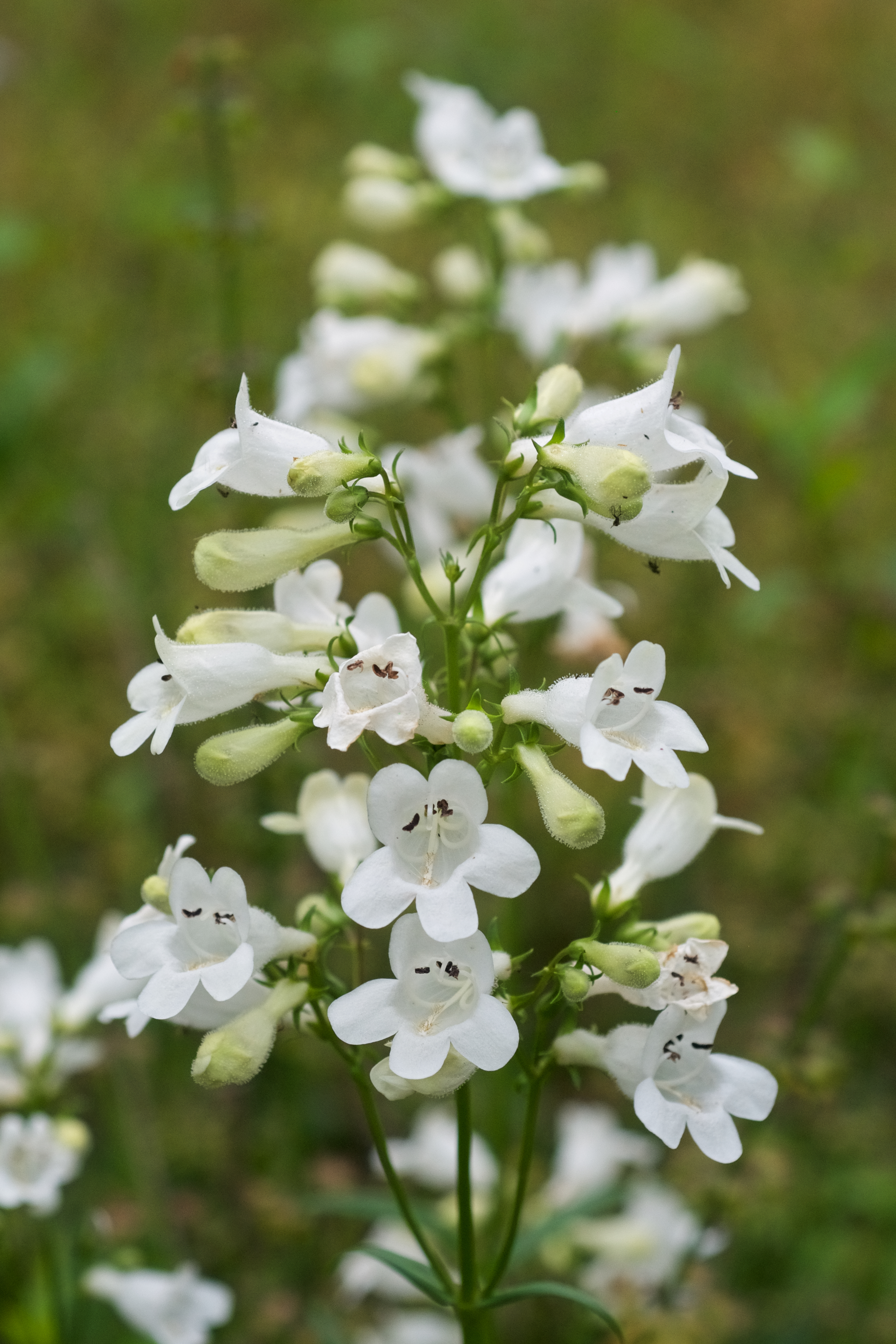
Penstemon digitalis (foxglove beardtongue)
Photo (and featured image) by Eric Hunt - Own work, CC BY-SA 4.0, https://commons.wikimedia.org/w/index.php?curid=72568406