Common Ninebark
By Lise Fracalossi
Physocarpus opulifolius
Native to: Vermont and scattered New England counties
Life cycle: Perennial Shrub/Small Tree
Light: Full/Partial Sun
Soil Moisture: Medium-Wet to Dry
Height: 4-9’
Spread: 6-10’
Spacing: 4-6’
Blooms: May-Jul
Bloom Color: White
Natural Habitat: Man-made or disturbed habitats, river or stream floodplains, forest edges, forests, shores of rivers or lakes
Benefits: Bird Favorite, Deer/Rabbit Resistant, Drought Tolerant, Urban Environment, Host Plant (eg. ninebark beetle, Io moth), Low Maintenance, Erosion Control/Soil Stabilization
“A terribly underutilized native shrub, ninebark is named for the numerous layers of bark which peel like birch. White clusters of flowers are followed by red seed heads, giving this plant a long “bloom” season. It thrives in any soil type, stabilizing soil.”
–Native Plant Trust
“The June-flowering plants will begin as pink buds, opening to white. This same pink stage will appear again as the flowers turn to fruit… This native shrub in the Rose family can reach heights of 8-10 feet and almost as wide although older plants can be cut to the ground in the winter to maintain a smaller appearance if it is not needed as a privacy fence… provides excellent cover for birds with its numerous, arching stems.”
–Prairie Moon Nursery
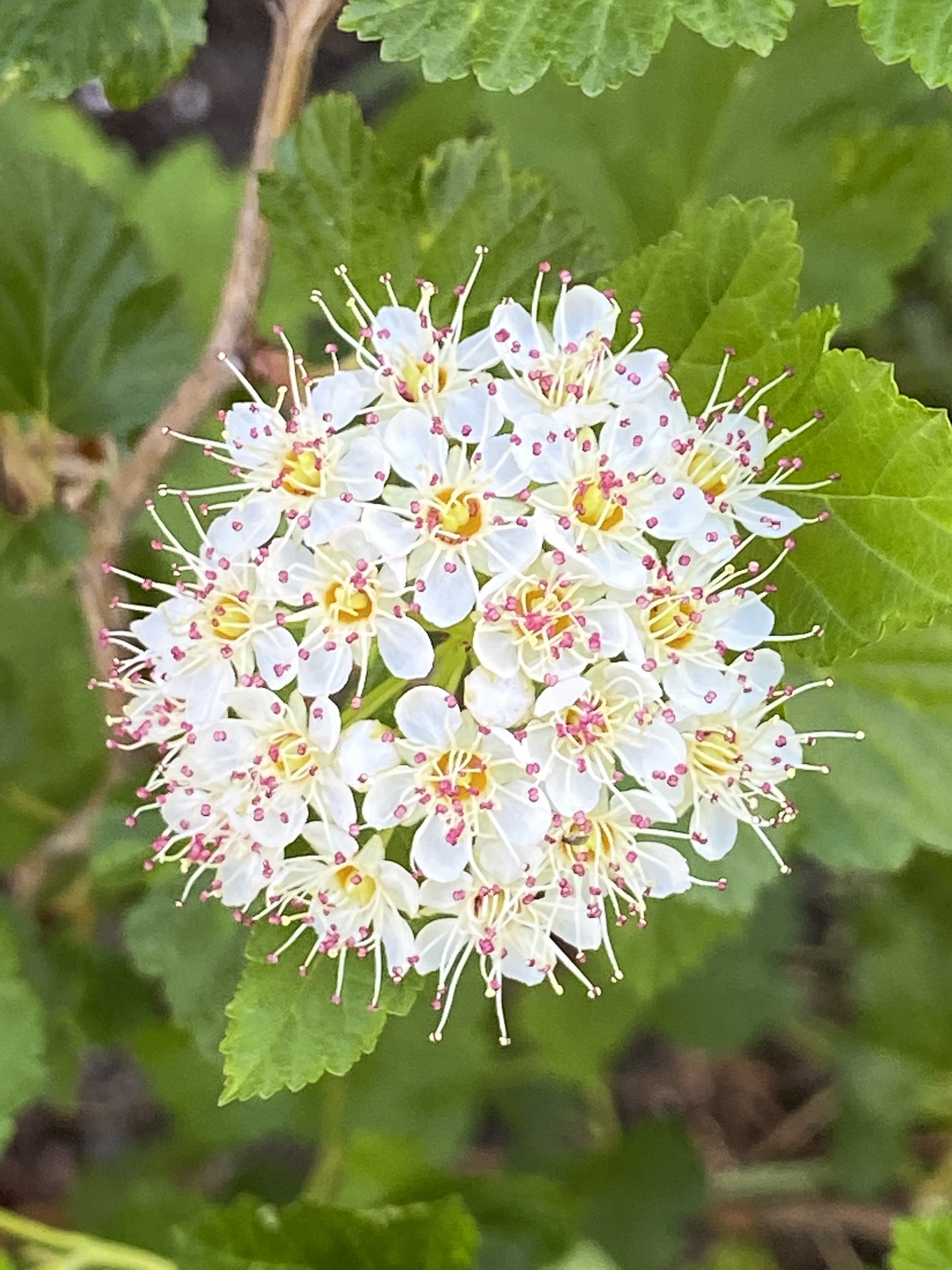
Common ninebark (Physocarpus opulifolius)
Photo (and banner image) by westsidepalace on iNaturalist, some rights reserved (CC BY-NC)