Virginia Mountain-Mint
By Lise Fracalossi
Pycnanthemum virginianum
Native to: All New England
Life cycle: Perennial
Light: Full/Partial Sun
Soil Moisture: Wet to Medium-Dry
Height: 2-3’
Spread: 1-2’
Spacing: 12-18”
Blooms: June-September
Bloom Color: white
Natural Habitat: Dry to moist meadows, ditches, and roadsides.
Benefits: Pollinator Favorite, Deer/Rabbit Resistant, Bird Favorite, Fragrant, Low Maintenance, Edible
Pairs Well With: Foxglove beardtongue, black-eyed coneflower, wild bee-balm, broad-leaved mountain-mint, New England aster, and three-lobed coneflower
In mid-summer, small white flowers bloom atop silvery-green foliage attracting numerous pollinators – this is a top nectar plant. Foliage is minty, fragrant, and used medicinally. Thrives in poor soil and can form large clumps by spreading through underground roots, so too aggressive for small gardens. Tough enough to establish in an existing meadow of dense vegetation or in a rain garden that alternates between wet and dry. Looks great in a large pot."
– Wild Seed Project
Mountain Mint attracts many insects to its flowers, including various bees, wasps, flies, small butterflies, and beetles. The leaves are very fragrant; when crushed they have a strong minty odor. The flowers will be white to shades of light purple, some with purple spots. Pycnanthemum means ‘densely flowered,’ an attribute that enables Mountain Mint to accommodate many pollinators at once."
– Prairie Moon Nursery
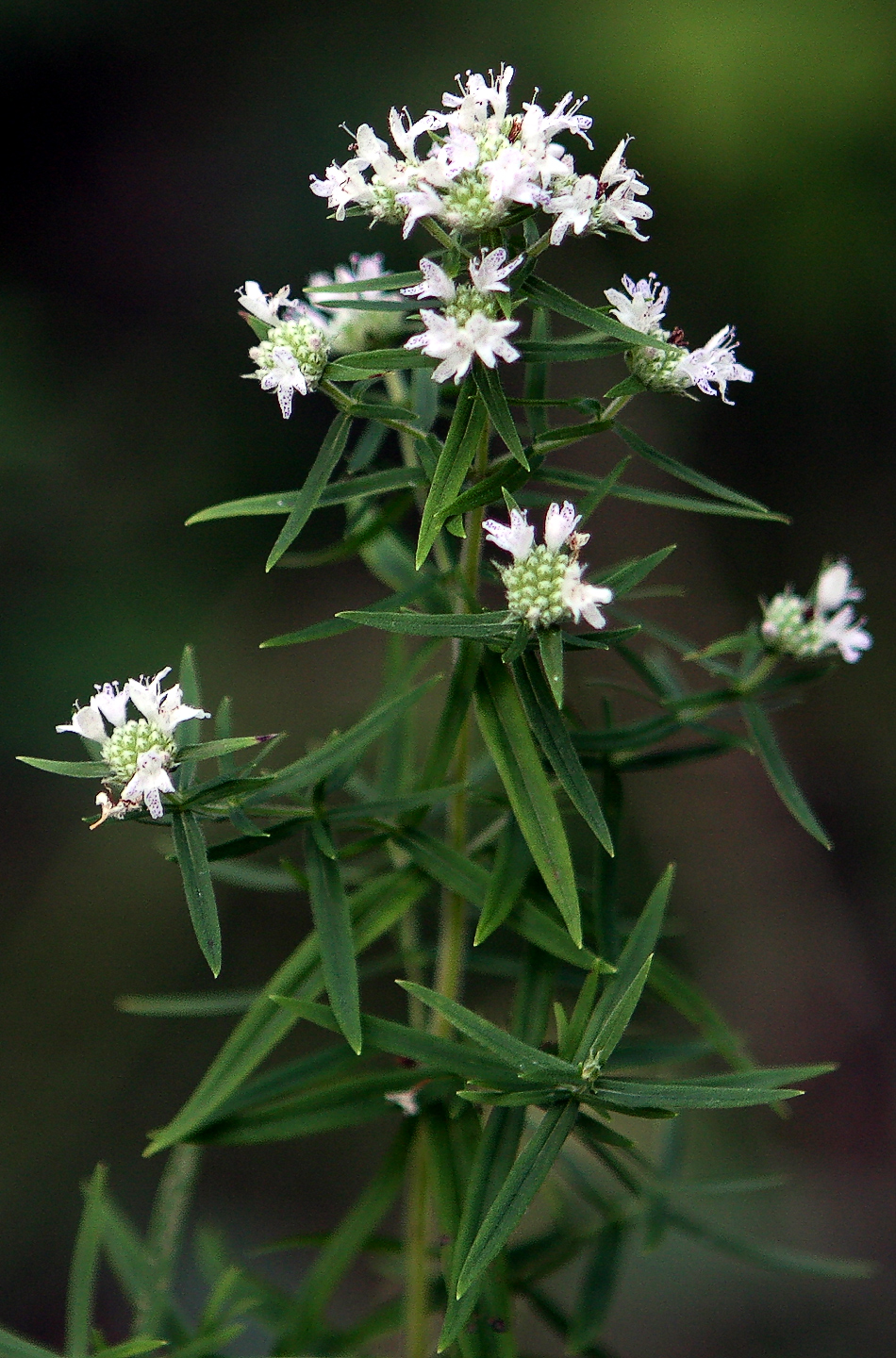
Pycnanthemum virginianum (Virginia mountain-mint).
Photo credit: Hardyplants at English Wikipedia - Own work, Public Domain