Flowering Raspberry
By Lise Fracalossi
Rubus odoratus
Native to: All of New England
Life cycle: Perennial
Light: Full/Partial Sun
Soil Moisture: Medium
Height: 3-5’
Spacing: 4-6'
Blooms: Summer
Bloom Color: Purple
Fruits: Summer
Fruit Color: Red
Natural Habitat: Woodland edges, shady roadsides, moist rocky slopes, and disturbed areas
Benefits: Pollinator Favorite, Benefits Other Pollinators/Wildlife, Bird Favorite, Urban Environment, Deer/Rabbit Resistant, Fragrant, Low Maintenance, Edible, Erosion Control/Soil Stabilization
Pairs Well With: Tall anemone, three-lobed coneflower, blue iris, bush honeysuckle, heart-leaved alexanders, and Virgin’s-bower clematis
“While just as edible as other raspberries and blackberries, this species can be ornamental too. The flowers are large, deeply colored, showy, and attract a multitude of native bees. Expect this to grow fast and flower long! Excellent for erosion control”
– Native Plant Trust
“Showy 2in. purple-pink flowers bloom mid-summer on an attractive shrub. Large maple-shaped leaves stay a fresh-green color all season. Shrub forms a nice colony, so give it space. Many insects pollinate the flowers; birds and people relish fruits.”
– Wild Seed Project
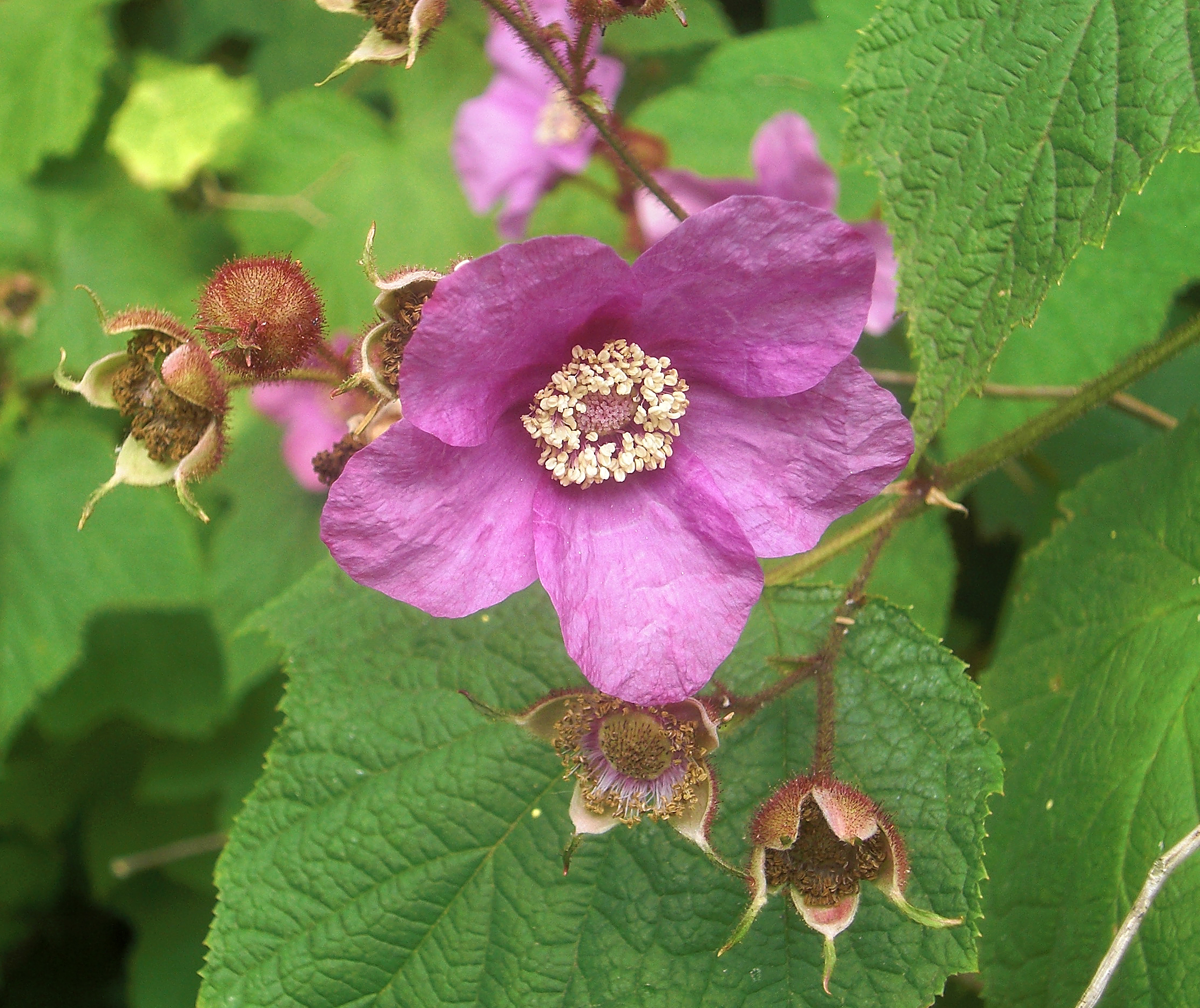
Flowering raspberry (Rubus odoratus)
Photo (and featured image) by Gunnar Creutz - Own work, CC BY-SA 4.0