Black Eyed Susan
By Lise Fracalossi
Rudbeckia hirta var. pulcherrima
Native to: Species native across New England; this variety only in VT, MA
Life cycle: Biennial or Short-Lived Perennial
Light: Full/Partial Sun
Soil Moisture: Medium-Wet to Medium-Dry
Height: 1-2’
Spread: 12-18”
Spacing: 10-12”
Blooms: Jun-Oct
Bloom Color: Yellow
Natural Habitat: Dry meadows, roadsides, and disturbed areas
Pairs Well With: Butterfly milkweed, smooth blue aster, foxglove beardtongue, and sundial lupine
Benefits: Pollinator Favorite, Deer/Rabbit Resistant, Bird Favorite, Urban Environment, Drought Tolerant, Salt Tolerant, Host Plant
“A bright golden-yellow meadow coneflower with a black center that blooms from mid-summer to fall. It attracts numerous butterflies when in bloom, and birds to its seed heads. Thrives in poor, dry soils. Will bloom the first year from seed; easy to establish in waste areas. A good urban plant for sunny dry locations.”
–Wild Seed Project
“Black-eyed Susan is one of the larval host plants of the Silvery Checkerspot. Its bright yellow flowers attract many different butterflies, moths, and bees. This plant is of high value to pollinators.”
–Prairie Moon Nursery
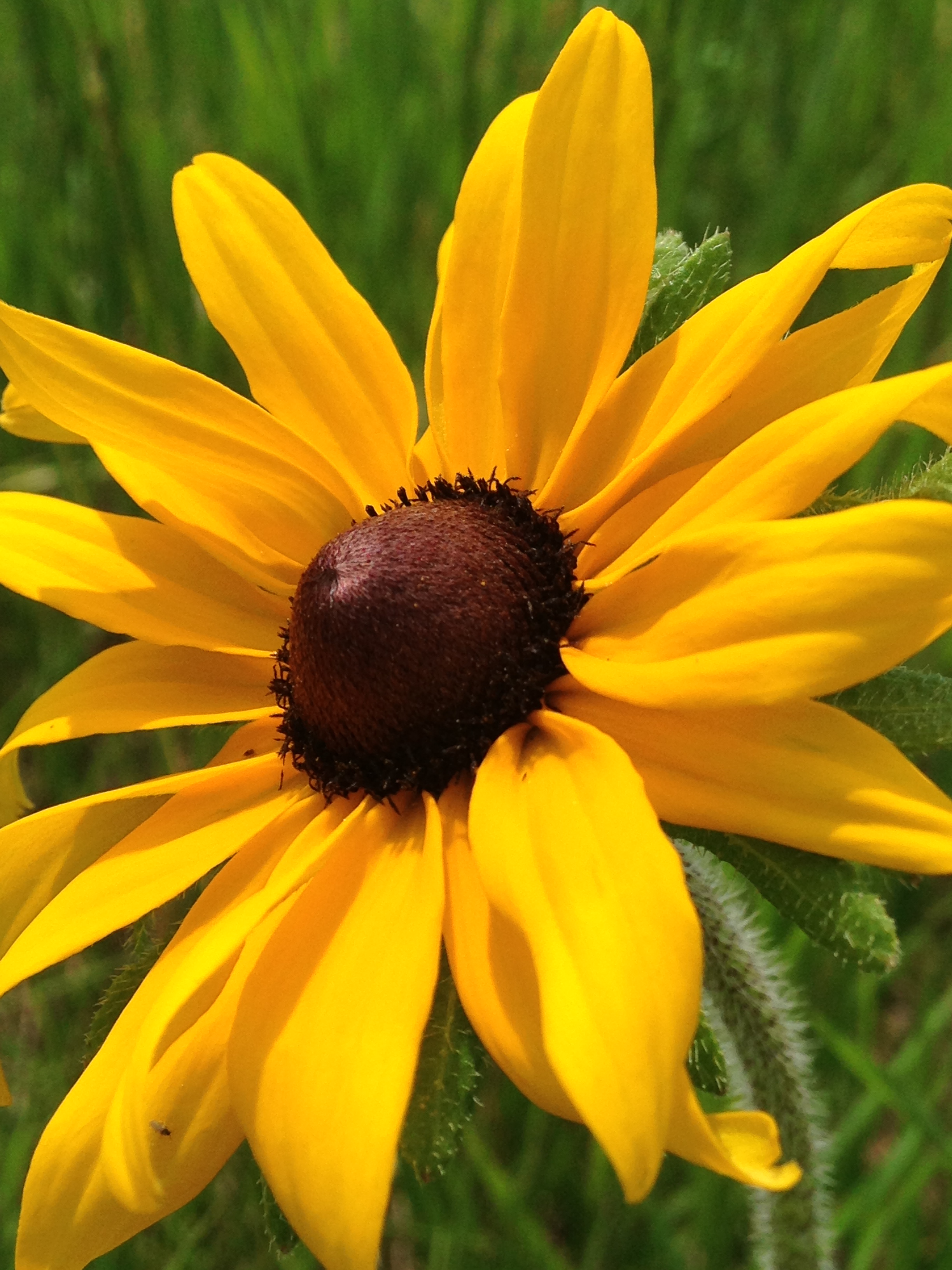
Black-eyed Susan (Rudbeckia hirta var. pulcherrima)
Photo (and featured image) by USFWS Mountain-Prairie - Black-eyed Susan, Public Domain