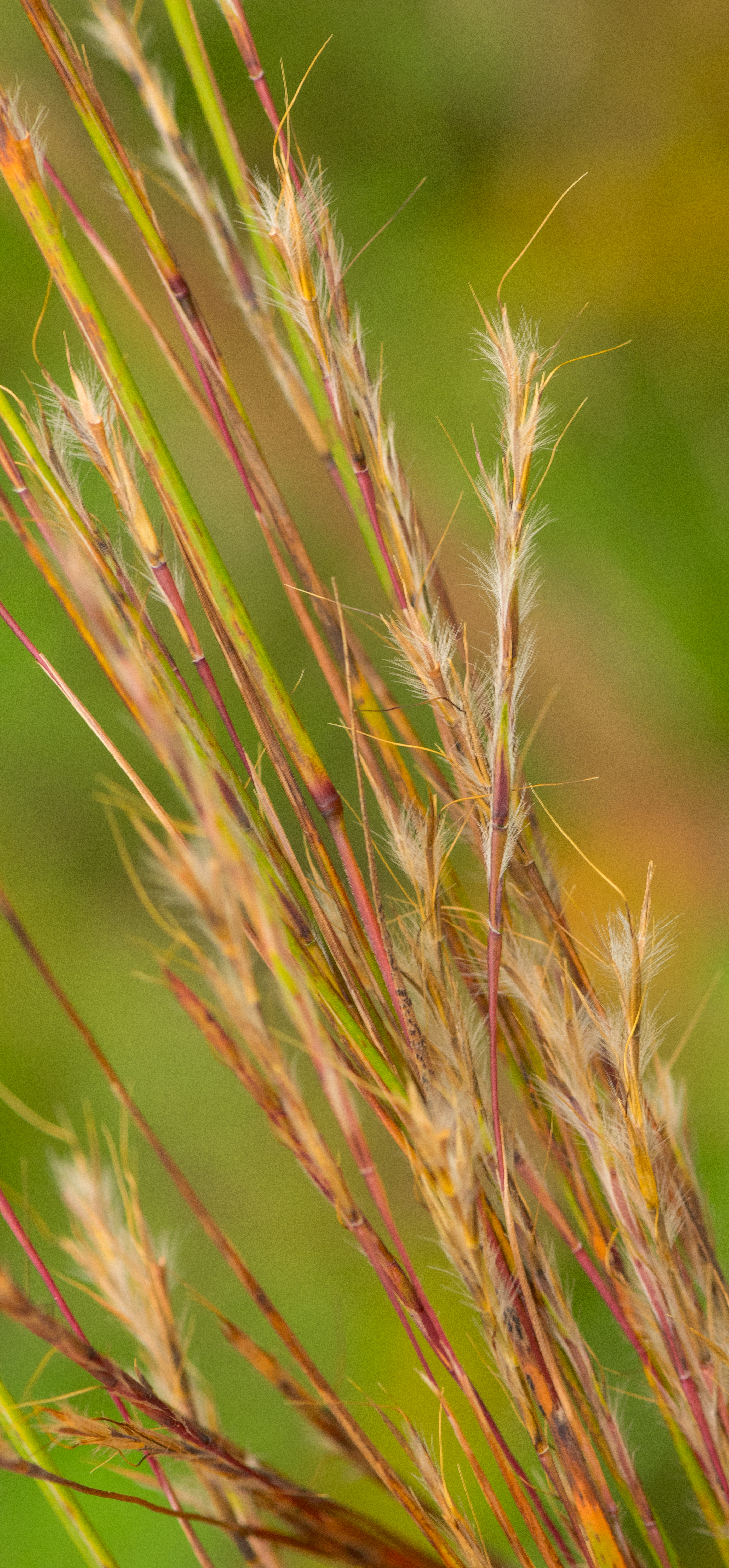
Little Bluestem
By Lise Fracalossi
Schizachyrium scoparium
Native to: All of New England
Life cycle: Perennial Grass
Light: Full/Partial Sun
Soil Moisture: Medium to Dry
Height: 1-4’
Spacing: 2-3’
Blooms: July-September
Bloom Color: Green, Blue
Natural Habitat: Dry, sandy, or gravelly roadsides, meadows, or pine barrens
Benefits: Bird Favorite, Host Plant, Benefits Other Pollinators Wildlife, Drought Tolerant, Deer/Rabbit Resistant, Salt Tolerant, Erosion Control/Soil Stabilization, Low Maintenance
Pairs Well With: Spotted bee-balm, flax-leaved stiff aster, downy goldenrod, common milkweed, butterfly milkweed, and smooth blue aster
“Distinctive clumps of blue-green foliage turn copper as fall sets in. Thrives in sunny, dry, sandy soil with little organic matter. Fluffy seeds glimmer in the fall sunlight. Deer-resistant foliage.”
–Wild Seed Project
“Little Bluestem serves as the larval host for several skipper species including the Dusted Skipper, Cobweb Skipper, Ottoe Skipper, Indian Skipper, Swarthy Skipper, and the Crossline Skipper. Other insects that feed on Little Bluestem include grasshoppers, Prairie Walkingsticks, the leaf-mining beetles, thrips, spittlebugs, and leafhoppers. The seeds of this grass are eaten by songbirds.”
–Prairie Moon Nursery