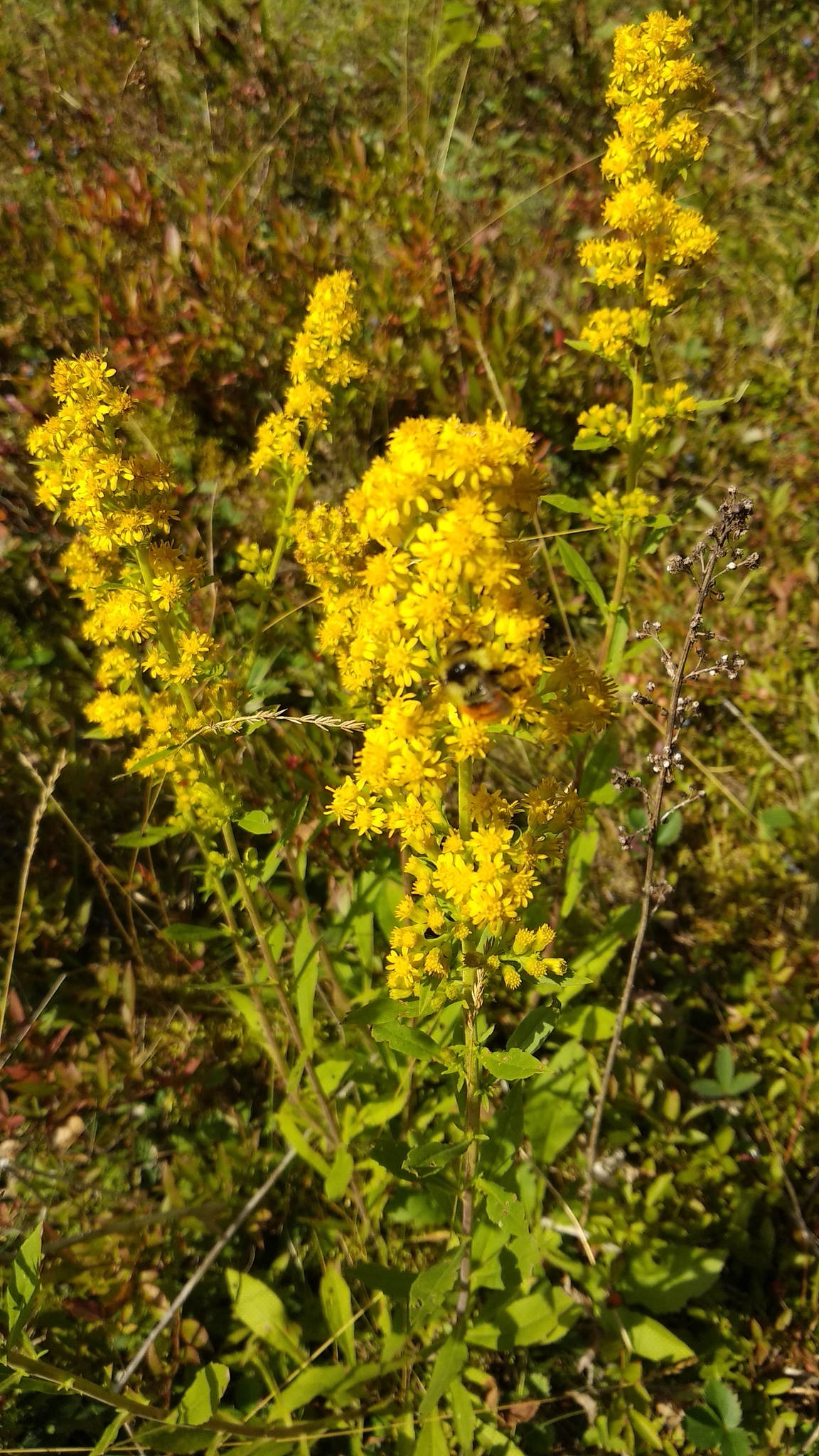
Downy Goldenrod
By Lise Fracalossi
Solidago puberula
Native to: All of New England
Life cycle: Perennial
Light: Full/Partial Sun
Soil Moisture: Medium to Dry
Height: 1-3’
Spacing: 1-2’
Blooms: Midsummer-Fall
Bloom Color: Yellow
Natural Habitat: Roadsides, blueberry barrens, and disturbed areas with dry, sandy, or gravelly acidic soil
Benefits: Host Plant, Attracts Songbirds, Pollinator Favorite, Benefits Other Pollinators/Wildlife, Urban Environment, Drought Tolerant, Deer/Rabbit Resistant, Salt Tolerant, Low Maintenance
Pairs Well With: Spotted beebalm, seaside goldenrod, New Jersey tea, switch panicgrass, flax-leaved stiff aster, smooth blue aster, and little bluestem
“Narrow plumes of small yellow flowers brighten the dry landscape in summer. Attracts late-season butterflies and bees. Birds eat seeds in autumn and winter.”
– Wild Seed Project
Downy goldenrod gets its name from the soft hairs that cover the stems. Common in well-drained, sunny sites like slopes and roadsides, this drought-tolerant species is an excellent late-season nectar and pollen source for a wide variety of pollinators.
– Native Plant Trust