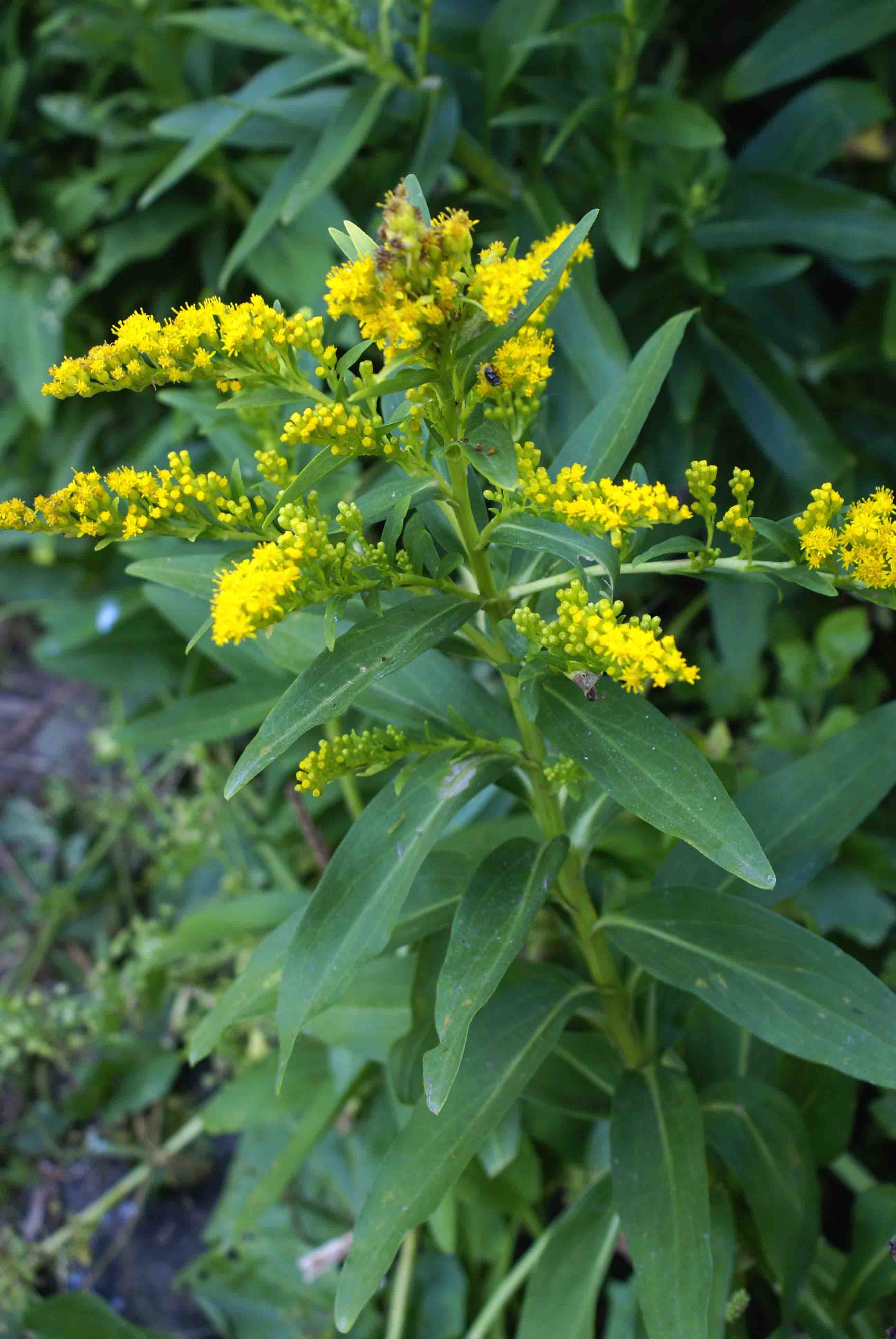
Seaside Goldenrod
By Lise Fracalossi
Solidago sempervirens
Native to: MA, CT, RI, ME, NH
Life cycle: Perennial
Light: Full Sun
Soil Moisture: Dry
Height: 24-42"
Spread: 18-30"
Spacing: 2-3'
Blooms: Early fall
Bloom Color: Yellow
Natural Habitat: Dry, sandy, or gravelly beaches, salt marshes, shores, and roadsides
Benefits: Pollinator Favorite, Host Plant (eg. Wavy Lined Emerald), Deer/Rabbit Resistant, Drought Tolerant, Flood Tolerant, Salt Tolerant, Urban Environment, Low Maintenance
Pairs Well With: Butterfly milkweed, smooth blue aster, little bluestem, sundial lupine, spotted bee-balm, bayberry, and flax-leaved stiff aster
“This salt-tolerant goldenrod has thick, leathery leaves with succulent attributes. The flowers erupt brightly in the late season like other species, thriving in sandy, sunny soils along coasts and on roadsides. This is a great plant for naturalizing and is not aggressive.”
–Native Plant Trust
“Yellow flower clusters brighten sunny, dry roadsides and shorelines throughout autumn. A clump-forming mass of pale green foliage stays neat all season. Great in a sunny, dry garden or landscape edge subject to road salt. Flowers provide late season nectar for pollinating butterflies and bees, and the seeds are eaten by birds. Thrives in the rain garden. Deer-resistant.”
–Wild Seed Project