Yellow Prairie Grass
By Lise Fracalossi
aka Indian grass
Sorghastrum nutans
Native to: All of New England
Life cycle: Perennial Grass
Light: Full Sun
Soil Moisture: Medium to Dry
Height: 3-6’
Spacing: 2-3’
Blooms: August-September
Bloom Color: Yellow, Orange
Natural Habitat: Meadows, roadsides, woodland openings, and rocky shorelines
Benefits: Bird Favorite, Host Plant, Deer/Rabbit Resistant, Drought Tolerant, Erosion Control/Soil Stabilization, Low Maintenance
Pairs Well With: Butterfly milkweed, wild bee-balm, downy goldenrod, common milkweed, and smooth blue aster
“Indian grass is a wonderful native species that works very well for ornamental value in a wide range of soils, from dry and sandy to moist or clayey… Its autumn blooms produce bright orange anthers that hang down from each flower providing winter interest, and its diffuse root system can control erosion.”
–Native Plant Trust
“Indian Grass is one of the first warm season grasses to form seeds and they are rich clusters of bronze colored seed. Golden stems and large seed heads provide ample color and texture to plantings and birds will enjoy the seeds come fall.”
–Prairie Moon Nursery
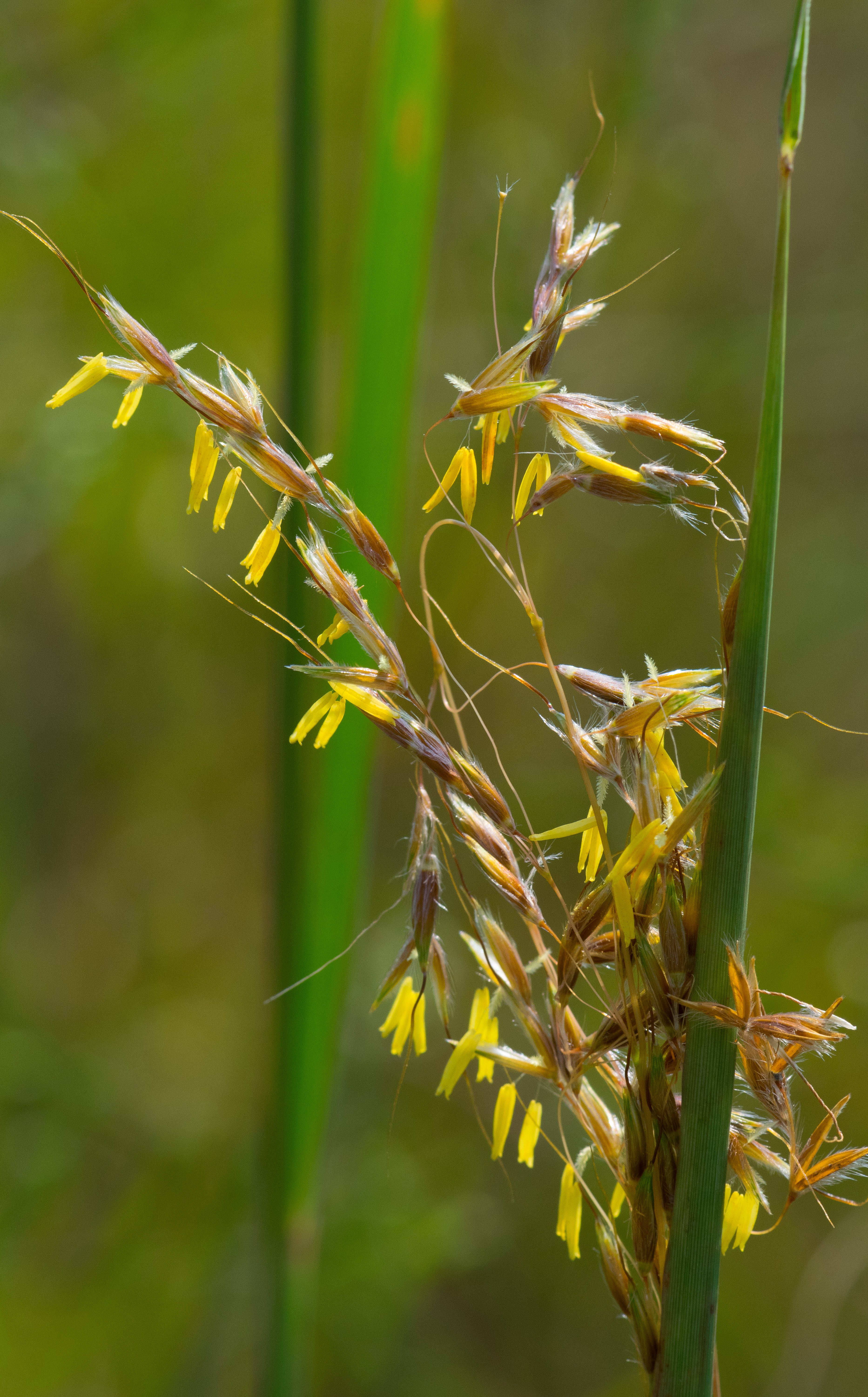
Yellow prairie grass (Sorghastrum nutans)
Photo (and banner image) by Joshua Mayer - Indian Grass (Sorghastrum nutans) on Flickr, CC BY-SA 2.0