Steeplebush
By Lise Fracalossi
Spiraea tomentosa
Native to: All of New England
Life cycle: Perennial Shrub
Light: Full/Partial Sun
Soil Moisture: Wet to Medium-Wet
Height: 2-5’
Spacing: 1-3’
Blooms: July-September
Bloom Color: Pink
Natural Habitat: Human-disturbed or -maintained habitats, marshes, meadows and fields, shores of rivers or lakes, swamps, wetland margins
Benefits: Bird Favorite, Host Plant (eg. Columbia silkmoth), Pollinator Favorite, Deer/Rabbit Resistant, Compaction Tolerant, Urban Environment, Low Maintenance, Erosion Control/Soil Stabilization
S. tomentosa is covered in sharp, narrow, upright pink flowers in midsummer. In the wild it is found in wet, open meadows and swamp edges, but it grows in just about any average garden soil. It’s a great species for birds, bees and butterflies.
– Native Plant Trust
“White or brownish ‘fur’ (tomentum) on the undersides of the leaves of rosy meadowsweet give it its specific epithet (tomentosa). An alternate common name, steeplebush, derives from its tall, narrow spires of pink flowers. It is a food plant for caterpillars of the Columbia silkmoth (Hyalophora columbia), a large saturnid documented from Maine. Plant it in a sunny spot of the garden, where it will attract many butterflies, but give it moderate access to water.”
– Go Botany
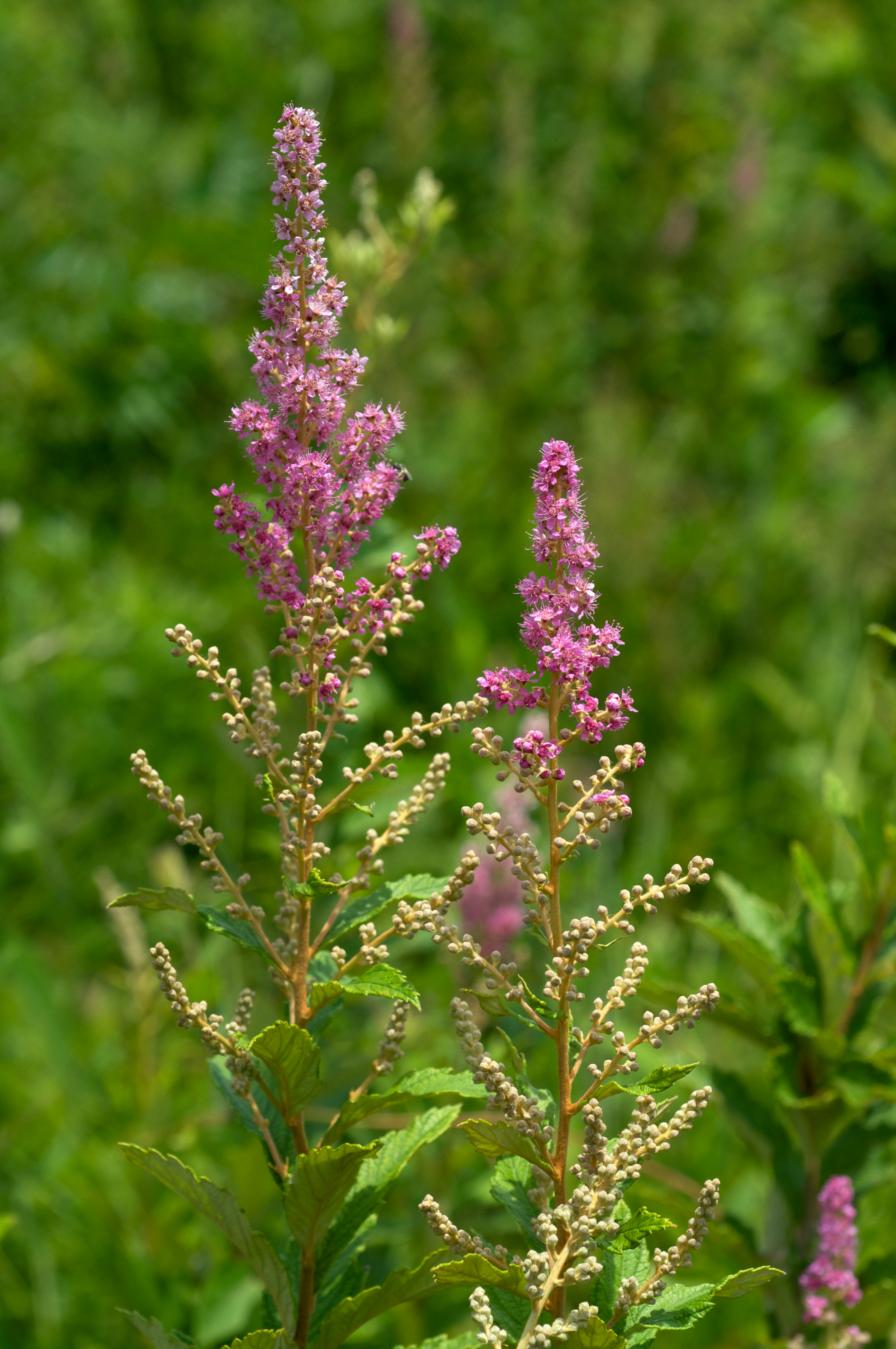
Steeplebush (Spiraea tomentosa)
Photo (and banner image) by Eric Hunt - Own work, CC BY-SA 4.0