New England Aster
By Lise Fracalossi
Symphyotrichum novae-angliae
Native to: All New England
Life cycle: Perennial
Light: Full/Partial Sun
Soil Moisture: Wet to Medium-Dry
Height: 2-5’
Spread: 2-3’
Spacing: 2-3’
Blooms: August-October
Bloom Color: Purple
Natural Habitat: Meadows, roadsides, and ditches with fertile, moist soils.
Benefits: Pollinator Favorite, Bird Favorite, Host Plant (eg. Wavy-Lined Emerald), Drought Tolerant, Urban Environment, Low Maintenance
Pairs Well With: Swamp milkweed, blue vervain, closed gentian, golden alexander, and coastal Joe-Pye weed
“A fall-blooming meadow aster with bright purple or pink flowers and yellow centers. Dark green foliage can be cut back in mid-summer to control height. Flowers supply abundant nectar for late-season bees and butterflies. Foliage important for many species in their larval stages. Excellent garden and landscape plant with late season interest.”
–Wild Seed Project
“Not the pale domesticates of the perennial border, the weak sauce of lavender or sky blue, but full-on royal purple that would make a violet shrink. The daisylike fringe of purple petals surrounds a disc as bright as the sun at high noon, a golden-orange pool, just a tantalizing shade darker than the surrounding goldenrod.”
–Robin Wall Kimmerer, Braiding Sweetgrass
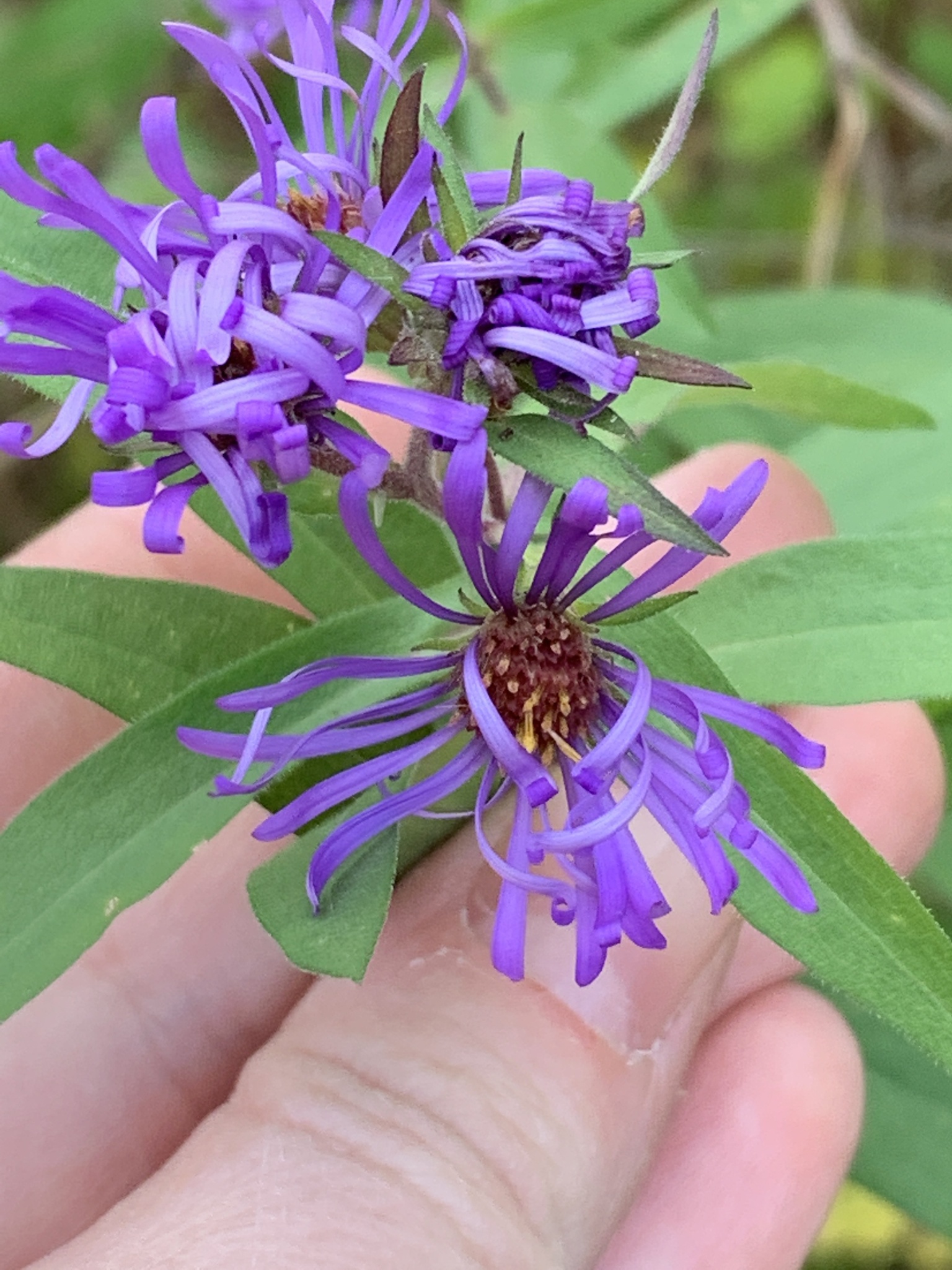
New England aster (Symphyotrichum novae-angliae)
Photo (and featured image) by Lise Fracalossi, Point Au Roche State Park, Plattsburgh, NY, October 2022.